
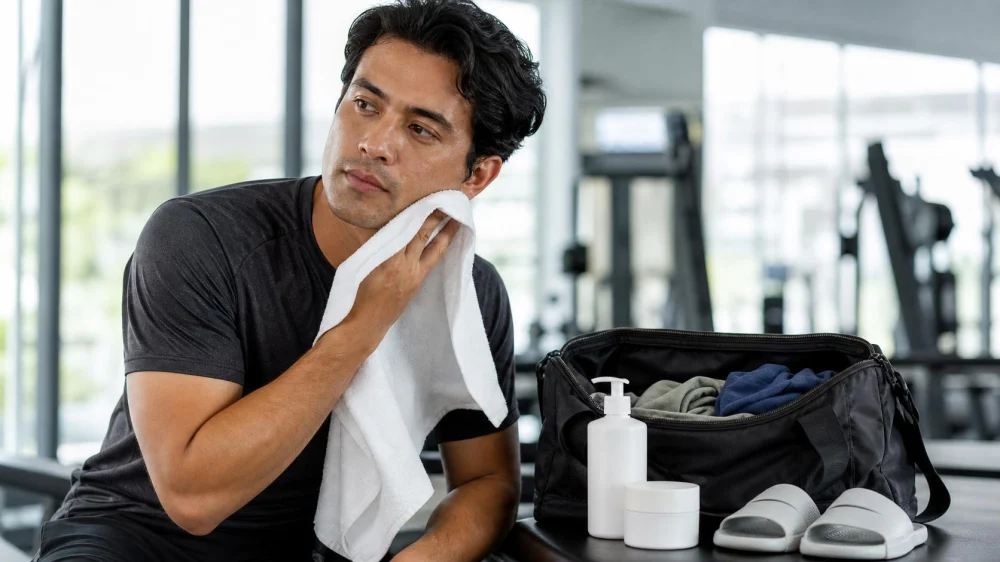
Workout Skin Care: A Before-and-After Routine That Works
Table of contents
Quick answer
For workout skin care, start with clean skin, comfortable moisture-wicking clothing, and sun protection when exercising outdoors. During exercise, pat sweat with a clean towel instead of rubbing and avoid touching your face. Afterward, change out of damp clothing and gently cleanse sweaty skin as soon as practical. Keep the routine simple and seek medical care for spreading, painful, or persistent symptoms.
Before exercise
Heavy makeup and oily residue can mix with sweat and increase the chance of clogged pores. Before training, gently remove makeup and use a mild cleanser if needed. Do not scrub or add several strong active products just because you expect to sweat.
Choose clean workout clothing that fits without repeatedly rubbing the same area. Moisture-wicking fabric can move sweat away from skin and dry faster. Shoes and socks should fit properly; pressure and sliding can contribute to blisters. People who repeatedly chafe may protect known friction points with a product or soft bandage recommended by their clinician.
During the workout
- Use a clean personal towel and pat sweat gently rather than wiping aggressively.
- Avoid touching the face with hands that have contacted shared equipment.
- Place a clean barrier between bare skin and shared benches or mats.
- Disinfect shared equipment according to the facility’s directions.
- Stop and address a hot spot before it becomes a blister or raw patch.
- Do not share towels, razors, cosmetics, helmets, or other personal items.
Heat, humidity, and protective gear can trap sweat. Take permitted breaks, adjust equipment for fit, and replace soaked clothing when a long session makes that practical.
After the workout
- Cool down safely. Let breathing and body temperature settle before rushing into a very hot shower.
- Change damp clothes. Put on clean, dry clothing as soon as practical.
- Cleanse gently. Shower and wash sweaty areas without harsh scrubbing. For the face, use lukewarm water and a gentle, non-abrasive cleanser.
- Pat dry. Use a clean towel and avoid rubbing irritated skin.
- Moisturize if needed. Apply a simple product suitable for your skin when it feels dry or tight.
- Inspect trouble spots. Check areas under straps, bands, shoes, and close-fitting clothing.
If a shower is not immediately available, the American Academy of Dermatology advises washing the face with a gentle non-comedogenic cleanser; at minimum, change clothing and cleanse when facilities become available.
Manage friction and equipment
Chafing often appears where skin rubs skin or fabric: inner thighs, underarms, feet, waistband, sports-bra edges, and under watchbands or helmet straps. Fit is the first check. Equipment should be secure without pinching, and clothing seams should not saw across one spot.
Clean reusable gear according to its manufacturer. Allow items to dry completely between sessions. Do not apply fragranced sprays or harsh disinfectants directly to skin unless their label says they are intended for that use.
Outdoor exercise
Use shade and sun-protective clothing when possible. AAD recommends broad-spectrum, water-resistant sunscreen with SPF 30 or higher on uncovered skin and reapplication according to the label, especially after sweating or swimming. Sun protection is still needed on cool or cloudy workout days.
Cold and wind can also dry exposed skin. A compatible moisturizer or petrolatum may help, but it does not replace sunscreen. Test any new product before a long event rather than changing several items on race day.
Gym-bag checklist
- Clean personal towel
- Fresh shirt, socks, and underwear
- Gentle cleanser in a closed container
- Simple moisturizer, if needed
- Water-resistant broad-spectrum SPF 30+ sunscreen for outdoor sessions
- Shower sandals for shared locker rooms
- Small bag that separates damp items from clean gear
Limitations and warning signs
This routine supports general hygiene but cannot diagnose acne, eczema, infection, allergy, or heat illness. Stop exercise and seek urgent help for trouble breathing, facial swelling, faintness, confusion, or a rapidly spreading severe rash. Ask a licensed clinician or board-certified dermatologist about painful lesions, drainage, fever, recurring infections, or a rash that persists despite basic care. People with prescribed skin treatment should follow their clinician’s exercise and cleansing advice.
Frequently asked questions
Should I wash my face before and after every workout?
AAD recommends gentle face washing and cleansing after heavy sweating. Avoid repeated harsh washing; adapt timing to your skin and clinician’s advice.
Can sweat cause acne?
Sweat, oil, occlusion, friction, and products can interact. Sweat alone does not explain every breakout, so persistent acne deserves individualized assessment.
Is a makeup wipe enough after exercise?
It may be a temporary step, but a gentle rinse or cleanser is preferable when available. Stop if a wipe stings or irritates your skin.
How do I prevent gym-related skin infections?
Use clean personal items, cover cuts, avoid sharing, wear shower sandals, clean shared equipment, and change damp clothing. Seek care for suspicious symptoms.
Official sources
This guide is based on the American Academy of Dermatology’s official patient resources, including How your workout can affect your skin and Face washing 101. These sources support gentle cleansing after heavy sweating, clean workout practices, appropriate clothing, and outdoor sun protection.
Next steps
Pack clean basics before your next session, note where sweat or friction causes trouble, and change only one part of the routine at a time. If symptoms are recurrent, photograph the area and take your product and activity notes to a qualified clinician.



 Perfect Place Aesthetics5.0 (60 reviews)
 Fusion Spa4.0 (34 reviews)
 Michele Terese Beauty5.0 (71 reviews)
 Arrow Esthetics5.0 (4 reviews)
 My Skin Esthetics5.0 (10 reviews)
 The Skin Angel Aesthetics5.0 (14 reviews)
 How to Treat and Prevent Skin Infections
 How To Heal Sun Damage And How To Manage It
 How to Repair Rosacea in People with Combination Skin
 How to Treat Skin Discoloration with the Best Brightening Products
 Daily Skin Care Routine for Age Spots – Simple Steps for Healthy, Glowing Skin
 Effective Ways to Treat and Prevent Skin Pigmentation from Hormonal Changes