
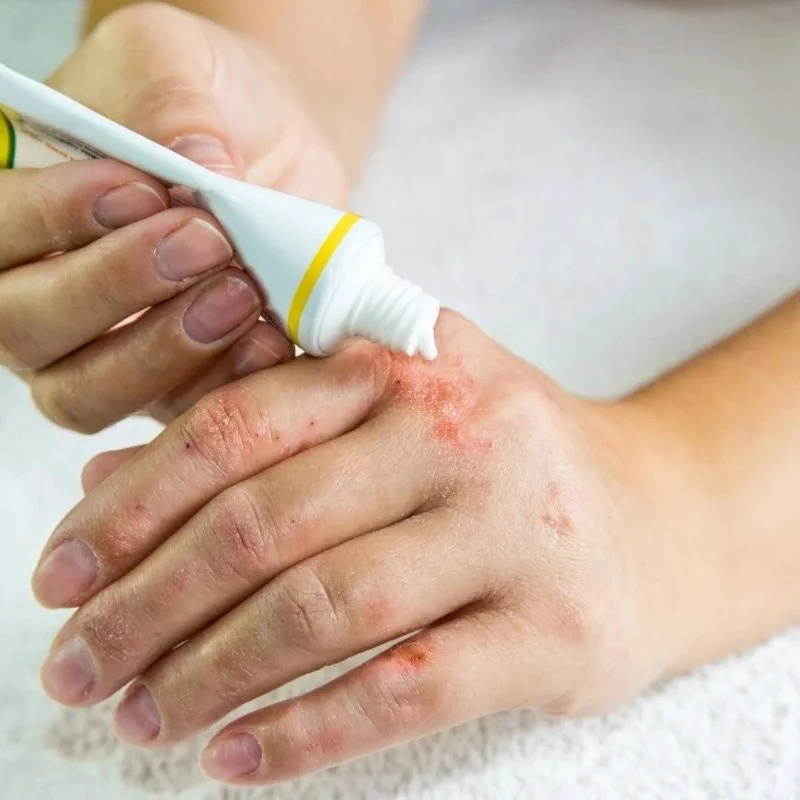
1. Understanding Eczema: What It Is and Why It Happens
Eczema, also known as atopic dermatitis, is a common skin condition that causes inflammation, redness, and irritation. It typically leads to dry, itchy skin and can affect any part of the body. The exact cause of eczema is still not fully understood, but it is often linked to genetics, immune system dysfunction, and environmental triggers. Managing eczema requires understanding its triggers and using effective treatments to reduce flare-ups and improve skin health.
1.1 Eczema Triggers and Causes
Various factors can trigger or worsen eczema, including:
- Genetics: Eczema tends to run in families, suggesting a genetic component to the condition.
- Allergens: Common allergens like dust, pollen, and pet dander can trigger eczema flare-ups.
- Environmental Factors: Extreme temperatures, dry air, and exposure to chemicals can irritate the skin.
- Stress: Emotional stress can lead to flare-ups or make existing eczema worse.
2. Effective Eczema Treatment Options
While eczema cannot be completely cured, there are several ways to manage and treat the condition effectively. Below are some of the best practices and treatments to help reduce eczema symptoms and improve skin health.
2.1 Topical Treatments for Eczema
Topical treatments are one of the most common ways to manage eczema. They include creams, ointments, and lotions that help moisturize the skin and reduce inflammation.
- Hydrocortisone Creams: These steroid-based creams help reduce inflammation and are often prescribed for flare-ups.
- Emollients: Regular use of emollients or thick moisturizers helps keep the skin hydrated and prevent dryness.
- Calcineurin Inhibitors: Non-steroidal creams that reduce inflammation by suppressing the immune response.
2.2 Natural Remedies for Eczema
In addition to conventional treatments, several natural remedies can help soothe eczema and reduce symptoms. These remedies focus on moisturizing the skin, reducing inflammation, and calming irritation. Here are some effective natural options:
- Aloe Vera: Known for its soothing and anti-inflammatory properties, aloe vera gel can help calm irritated skin.
- Coconut Oil: Rich in fatty acids, coconut oil is a natural moisturizer that can help reduce dryness and itching.
- Oatmeal Baths: Soaking in an oatmeal bath can relieve itching and help calm inflamed skin.
- Tea Tree Oil: With its anti-inflammatory and antimicrobial properties, tea tree oil can help reduce eczema flare-ups.
3. Lifestyle Changes to Manage Eczema
Managing eczema involves more than just using creams or medications. Lifestyle changes can play a significant role in controlling flare-ups and preventing eczema from becoming a chronic issue.
3.1 Avoiding Eczema Triggers
One of the most effective ways to manage eczema is by identifying and avoiding common triggers. Keeping a diary of your daily activities and skin reactions can help pinpoint what may be causing flare-ups. Common triggers to avoid include:
- Harsh chemicals in cleaning products or skincare products
- Hot showers or baths that dry out the skin
- Wearing tight or rough fabrics, such as wool, which can irritate the skin
- Exposure to allergens like dust, pet dander, or pollen
3.2 Managing Stress to Reduce Flare-Ups
Stress is a major trigger for eczema flare-ups. Learning to manage stress effectively through relaxation techniques, such as yoga, meditation, or deep breathing exercises, can help reduce the frequency and severity of flare-ups. Regular exercise is also beneficial for reducing stress and promoting overall skin health.
3.3 Maintaining Good Hygiene
Keeping your skin clean and free of irritants is essential when managing eczema. However, it's important to avoid over-washing the skin, as this can strip away natural oils and worsen dryness. Use mild, fragrance-free soap and lukewarm water to wash your body, and always follow up with a good moisturizer.
4. When to Seek Professional Help
While many people can manage their eczema with home remedies and lifestyle changes, there are times when professional help is needed. If your eczema is severe, persistent, or not responding to over-the-counter treatments, it’s time to consult a dermatologist. A healthcare provider can recommend prescription medications or other treatments, such as phototherapy, that may be more effective for your condition.
4.1 Consulting a Dermatologist
If your eczema causes significant discomfort or interferes with your daily life, a dermatologist can help you find the right treatment plan. In some cases, a doctor may prescribe stronger topical treatments or oral medications to control symptoms and prevent flare-ups.
5. Conclusion: Effective Eczema Management
Although eczema can be a frustrating and persistent condition, with the right combination of treatments and lifestyle changes, it is possible to manage and reduce symptoms effectively. By incorporating natural remedies, avoiding triggers, and staying consistent with your skincare routine, you can improve your skin health and quality of life. For more personalized eczema treatments and expert advice, visit SkinCare Experts to discover the best products and services tailored to your skin’s needs.

 Green Care Cosmetic Studio4.0 (11 reviews)
 Skin Care By Tamara70.0 (0 reviews)
 Savant Skin Care0.0 (0 reviews)
 Dr. Ann Aesthetics4.0 (44 reviews)
 Trinity Wellness & Beauty- Botox, Weight Loss, Microneedling5.0 (34 reviews)
 SKIN RITUALS STUDIO5.0 (13 reviews)
 How to Choose the Right Sun Damage Treatments for People with Dry Skin
 How To Manage Dull Skin: What You Need To Know
 Daily Skin Care Routine for Age Spots – Simple Steps for Healthy, Glowing Skin
 The Science Behind Hyperpigmentation for People with Oily Skin
 How To Brighten Dark Circles For Teens – Effective Tips & Tricks
 How to Prevent Redness Effectively – Skincare Expert Guide