
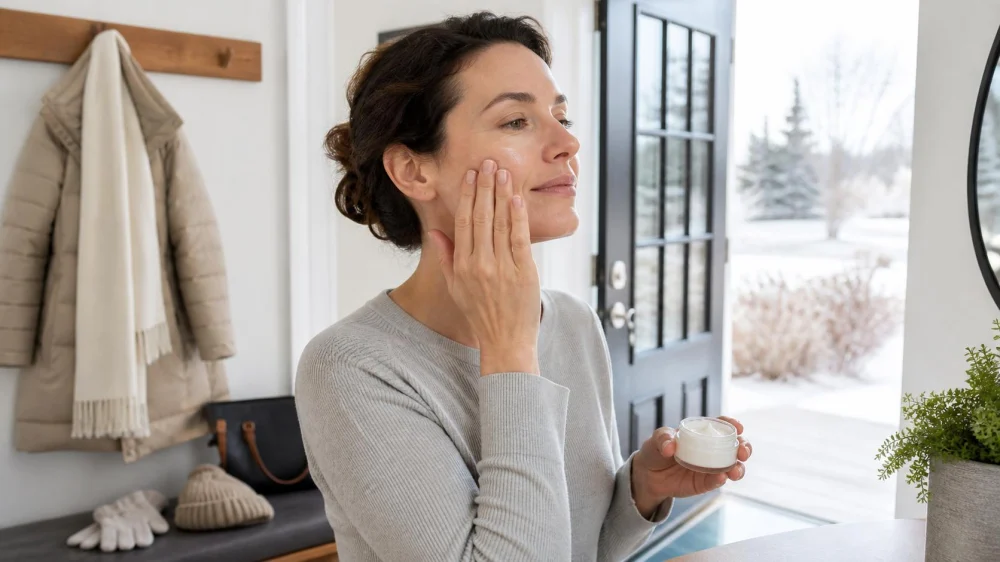
Cold Wind Skin Care: Protect, Cleanse, and Recover
On this page
Quick answer
Before cold, windy exposure, apply a bland fragrance-free moisturizer to slightly damp skin, use broad-spectrum sunscreen on exposed areas, and cover with clean soft layers that do not rub. After coming inside, remove wet clothing, rinse only when needed with lukewarm water and a gentle cleanser, then moisturize again. Pause scrubs and strong active products if skin stings. Seek medical care for blistering, numb pale skin, severe swelling, infection signs, or persistent rash.
Cold wind can increase water loss and mechanical irritation, weakening the outer skin barrier. Temperature shifts, low humidity, sun, and wet fabric can add stress.
Before going outside
- Use a gentle routine rather than adding several new products.
- Apply moisturizer early enough to settle before covering.
- Protect exposed face, ears, neck, and hands with compatible sunscreen.
- Use lip protection and reapply under label directions.
- Carry a small clean moisturizer if the trip is long.
Sunscreen still matters in winter and at elevation or around reflective snow. Follow current label guidance.
Use clothing safely
- Choose smooth breathable fabric next to sensitive skin.
- Wash scarves, masks, gloves, and helmet liners regularly with a tolerated detergent.
- Avoid tight seams that rub the same area repeatedly.
- Change wet fabric promptly.
- Keep chemical hand warmers from direct skin contact and follow their warnings.
A cover is helpful only when it stays clean, dry, and comfortably fitted. Trapped sweat and friction can worsen irritation.
After exposure
Warm gradually indoors. Do not place numb or very cold skin against a heater, hot water, or heating pad. For ordinary dryness, wash with lukewarm water, pat dry, and moisturize within a few minutes.
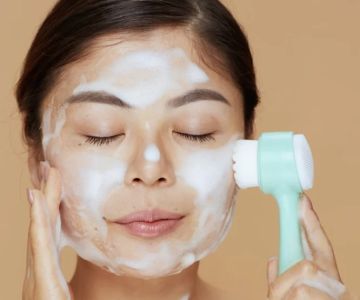
If cheeks feel hot and tight, skip exfoliating brushes, scrubs, fragranced masks, and strong acids or retinoids until the skin is comfortable. Reintroduce routine products one at a time.
Simplify the routine
- gentle cleanser only where needed;
- fragrance-free moisturizer suited to your skin;
- broad-spectrum sunscreen for exposed skin;
- plain lip barrier;
- clean protective clothing.
Best for temporary weather dryness: a short routine with consistent barrier support. Not ideal: layering many oils, balms, actives, and fragranced products that make the trigger hard to identify.
When to seek care
Seek prompt medical help for hard, pale, waxy, numb, blistered, or severely painful skin after cold exposure. Arrange evaluation for a rash that spreads, oozes, crusts, affects the eyes, recurs with cold, or fails to improve. Trouble breathing or rapidly increasing facial swelling is an emergency.
Important notes
This is general skin-care information, not diagnosis or frostbite treatment. Rosacea, eczema, cold urticaria, circulation disorders, medication effects, and occupational exposure need individualized advice. Children and older adults can have different risks.
Evidence notes
The routine reflects common dermatology practice: reduce irritants, use emollient barrier support, protect from ultraviolet exposure and friction, change wet fabric, and recognize cold injury. A qualified clinician is the primary source for persistent or severe symptoms.
FAQ
Should moisturizer go on before sunscreen?
Follow product directions; commonly moisturizer is allowed to settle before sunscreen.
Can wind burn the skin?
Wind can contribute to dryness and irritation; true thermal burns are different.
Should I exfoliate flakes?
No. Scrubbing irritated skin can worsen barrier damage.
Does hot water help?
Very hot water can increase irritation and is unsafe for numb skin.
Can a scarf cause breakouts?
Friction, sweat, products, and infrequent washing can contribute. Use clean, comfortable fabric.
Next steps
Check the forecast, simplify tomorrow’s routine, moisturize, use sunscreen, and choose a clean soft face covering. After exposure, change wet layers and support the barrier. Treat numb, blistered, or severely painful skin as a medical issue.


 Skn Bar LV5.0 (6 reviews)
 Car.Esthetics Skin & Beauty4.0 (19 reviews)
 Sun Med Spa5.0 (8 reviews)
 Betsy Glick Skincare Studio5.0 (23 reviews)
 Beauon K | 파메스테틱 | 플러싱스킨케어 | 뉴욕스킨케어 | 플러싱 반영구, 두피관리 SMP5.0 (33 reviews)
 Fearless skin esthetics5.0 (3 reviews)
 Benefits of Using Rosacea and How to Manage It
 Best Skin Care Treatments for Reducing Acne and Breakouts: Top Solutions for Clearer Skin
 Effective Solutions to Treat and Prevent Skin Peeling
 Essential Tips for Taking Care of Your Skin After a Facial Treatment
 How to Use Rosehip Oil for Brighter, Smoother Skin | SkinCare Experts
 Top Tips for Dull Skin Using Natural Remedies