

Skin Reacting to a New Product? A Safe Response Plan
On this page
Quick answer
Stop the suspected new skincare product when it causes unexpected burning, stinging, redness, itching, swelling, or a rash. Gently remove remaining product, avoid adding more active ingredients, and protect the area from friction and sun. Get emergency help for breathing difficulty or rapidly increasing face, lip, tongue, or throat swelling; seek medical care for blistering, severe pain, infection, or persistence.
Irritation and allergy can look similar
Irritant contact dermatitis occurs when a substance directly damages or disrupts the skin barrier. Allergic contact dermatitis is an immune reaction to an ingredient. Both can cause redness, itch, burning, swelling, scaling, or blisters, and a reaction may appear immediately or hours to days after exposure.
A product used safely for years can still become a problem after reformulation or new sensitization. Location provides clues: eyelid skin can react to a face product, makeup tool, nail product transferred by the hands, or another indirect exposure. A clinician may need history, examination, and patch testing to identify the cause.
Emergency warning signs
Call emergency services for trouble breathing, throat tightness, faintness, confusion, or rapidly increasing swelling of the face, lips, tongue, or throat. Urgent medical assessment is also appropriate for widespread blistering or peeling, severe eye exposure or vision change, intense pain, fever with a rapidly spreading rash, or signs of a serious infection.
Do not drive yourself if breathing, vision, or consciousness is affected. Bring the product package or a clear photo of its label if it is safe to do so.
First steps after a reaction
- Stop using the suspected product and do not “push through” unexpected burning or stinging.
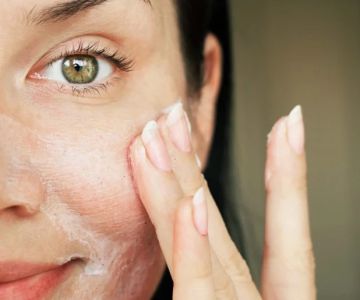
- Wash hands, then gently remove residue with lukewarm water and a mild routine cleanser if tolerated.
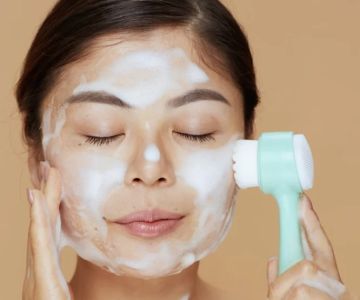
- Pat dry; do not scrub, exfoliate, brush, or use a cleansing device.
- Apply a cool, damp clean cloth for short intervals to reduce discomfort.
- Use only a previously tolerated, fragrance-free moisturizer if it does not sting.
- Protect the area from sun with shade and clothing; use a tolerated sunscreen when appropriate.
If a prescribed product causes a reaction, contact the prescriber promptly for instructions rather than independently restarting, changing frequency, or combining it with another treatment.
Simplify the routine
Pause nonessential exfoliating acids, retinoids, scrubs, peels, fragrance, astringents, and other products likely to add irritation. Keep the routine short: gentle cleansing, a tolerated moisturizer, and sun protection. Do not introduce a “repair” serum with several unfamiliar ingredients during the reaction.
Once skin returns to baseline and a clinician has not advised otherwise, reintroduce products one at a time with enough time between them to observe a response. Do not deliberately re-test a product that caused a severe reaction.
Record products and timing
- Photograph the affected area in consistent light.
- Write down the first application, dose, frequency, and reaction time.
- Save the product, box, ingredient list, lot code, and purchase source.
- List every cleanser, moisturizer, sunscreen, makeup, hair, and nail product used.
- Record prescription and over-the-counter medicines and supplements.
- Note whether heat, exercise, sun, shaving, or another procedure occurred.
This log helps distinguish a new exposure from a delayed reaction and gives a dermatologist useful details for evaluation.
When to seek dermatology care
Contact a clinician for a rash that blisters, repeatedly returns, causes significant discomfort, affects the eyes or genitals, shows infection signs, or does not improve after the suspected exposure stops. A dermatologist can assess other conditions and may use formal patch testing for delayed allergy.
Seek earlier advice if you have extensive eczema, immune suppression, a history of severe allergy, a recent procedure, or a prescription treatment involved. Infants and children need age-appropriate medical guidance.
How to report a cosmetic reaction
The U.S. Food and Drug Administration advises consumers with a cosmetic reaction to stop the product, contact a healthcare provider, and report the problem. A report can include rash, redness, burn, infection, scarring, hair loss, or another unexpected event. Preserve the exact product and lot information before discarding packaging.
Reporting does not replace medical care and the FDA does not diagnose individual reactions. You may also notify the manufacturer using the contact information on the package.
Important notes and limitations
This article is general U.S. skincare guidance, not a diagnosis or individualized treatment. “Natural,” “clean,” “hypoallergenic,” or “dermatologist tested” language does not guarantee that a person cannot react. Medication advice, including use of hydrocortisone or antihistamines, should account for age, pregnancy, medical history, body location, and interactions; ask a clinician or pharmacist.
Evidence and sources
The American Academy of Dermatology describes delayed contact dermatitis, recommends avoiding the cause and scratching, and supports cool compresses and a tolerated fragrance-free moisturizer. The FDA’s current cosmetic complaint guidance says to stop the product, contact a healthcare provider, and report unexpected reactions.
- American Academy of Dermatology: Contact Dermatitis Symptoms
- American Academy of Dermatology: Contact Dermatitis Tips
- FDA: Report a Cosmetic Product Related Complaint
Frequently asked questions
Is tingling proof that a skincare product is working?
No. Unexpected stinging, burning, or tingling can signal irritation. The AAD advises stopping an irritating nonprescription product; ask the prescriber about expected effects from a prescribed treatment.
Can a familiar product suddenly cause allergy?
Yes. Sensitization can develop over time, and formulas can change. Save the current package and ingredient list.
Should I apply several barrier-repair products?
More products add more possible irritants. Use a simple previously tolerated routine and seek advice if even bland moisturizer burns.
When can I restart active ingredients?
Wait until the skin is back to baseline and follow any clinician instructions. Reintroduce one product at a time; do not retry the suspected trigger after a severe reaction.
Can an online photo identify the allergen?
No. Many rashes look alike. A dermatologist may need an examination and patch testing to identify allergic contact dermatitis.
Next steps
Stop the suspected product, simplify the routine, photograph the reaction and label, and contact a clinician if symptoms are severe, persistent, recurrent, blistering, or infected. Use emergency care for airway symptoms or rapidly increasing facial swelling.



 Skyn 32 Aesthetics Studio5.0 (15 reviews)
 Contempo Day Spa4.0 (6 reviews)
 Arch and Crown Aesthetics5.0 (83 reviews)
 SkinCeuticals SkinLab by Dr. Roth – Houston4.0 (869 reviews)
 Skincare By Renee0.0 (0 reviews)
 Skin Boutique by Angelique4.0 (14 reviews)
 How To Prevent Your Dark Circles With These 7 Tips | SkinCare Experts
 Natural Remedies For Your Age Spots With These 7 Tips
 The Ultimate Guide to Skin Care Treatments for Blackheads
 How to Protect Your Skin From Night Creams to Improve Blackheads
 Natural Remedies for Eczema – Avoid Common Mistakes & Find Relief
 Effective Ways to Treat and Prevent Skin Pigmentation from Hormonal Changes