
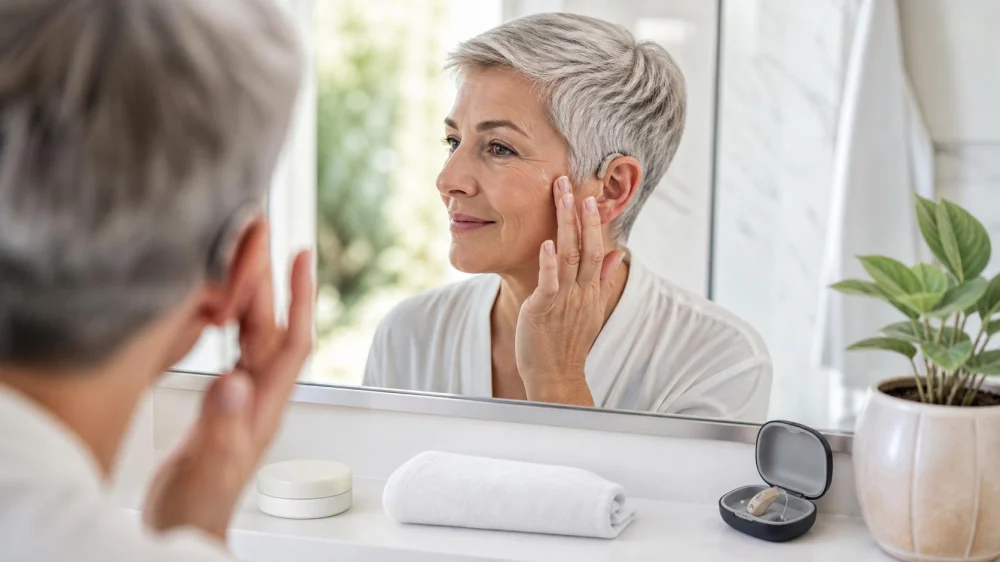
Skin Care Around Hearing Aids: Reduce Moisture and Residue
On this page
Quick answer
Apply skin care before inserting a hearing aid, keep product out of the ear canal and off the device, and wait until the skin and hair are fully dry. Use small amounts and avoid heavy residue where the earmold, dome, tubing, or behind-the-ear body contacts skin. Clean the device only as its manufacturer or hearing professional directs. Persistent redness, pain, drainage, sores, swelling, or sudden hearing change needs professional assessment.
Build a dry-skin, dry-device routine
- Wash and dry hands. Handle both skin products and the device with clean, dry fingers.
- Remove the device for water routines. Follow its water-resistance instructions; do not assume it is waterproof.
- Clean skin gently. Keep cleanser and water outside the ear canal and rinse as appropriate.
- Dry completely. Pat skin and hair dry, including the crease behind the ear.
- Apply a small product amount. Keep it away from openings and the exact contact surfaces when possible.
- Allow absorption. Insert the hearing aid only when the area no longer feels wet, tacky, or greasy.
- Check after removal. Look for product transfer, pressure marks that persist, or new irritation.
Choose and place products carefully
Fragrance, hair spray, sunscreen, makeup, oil, and thick moisturizer can irritate some skin or coat microphones, vents, contacts, tubing, and domes. A product that works elsewhere on the face may not suit an occluded area behind or inside the outer ear.
Add one new product at a time and keep it outside the ear canal. When sun protection is needed, ask the hearing professional how to protect nearby skin without contaminating the device. Do not use powder to absorb moisture unless the relevant professionals say it is safe for both skin and equipment.
Clean skin and device separately
Use a clean soft cloth and the approved tools for the hearing aid. Do not use skin cleanser, alcohol, household disinfectant, water, compressed air, or sharp objects on it unless the manufacturer explicitly directs that method. Store it in its case or approved drying system away from a wet sink, pets, and children.
For the skin, use a simple gentle routine and avoid scrubbing pressure points. An earmold or dome that no longer fits well can create friction or trap moisture; cleaning harder does not correct fit.
When to stop and get help
- Redness or pressure marks that do not fade after device removal
- Cracking, bleeding, swelling, blisters, sores, or increasing pain
- Drainage, odor, fever, or suspected infection
- Device feedback, reduced performance, moisture warnings, or damaged parts
- Sudden hearing change, dizziness, or new neurologic symptoms
Pause the irritating product and contact the appropriate hearing, medical, or dermatology professional. Sudden hearing loss or severe symptoms can be time-sensitive and should not wait for a routine skin-care adjustment.
Limitations and important notes
This guide cannot diagnose contact dermatitis, pressure injury, infection, or device fit. Do not place steroid, antibiotic, essential oil, or other treatment in or around the ear without appropriate professional guidance. Hearing aids and implant-related equipment have different care rules.
Sources and evidence notes
The routine uses common skin-barrier and device-care principles: minimize moisture and friction, keep cosmetics out of openings, introduce changes one at a time, and follow manufacturer cleaning instructions. Hearing and medical professionals determine fit and diagnose symptoms.
Frequently asked questions
Can I wear moisturizer under a hearing aid?
Possibly, but use a small amount, avoid device openings, and let skin dry fully. Ask about persistent irritation or product transfer.
Is a water-resistant hearing aid safe in the shower?
Do not assume so. Water-resistance ratings and approved exposure differ; follow the exact device instructions.
Why is the skin behind my ear sore?
Friction, pressure, moisture, product reaction, or a medical issue may contribute. Have persistent or worsening soreness assessed.
Can I clean the hearing aid with an alcohol wipe?
Only if the manufacturer or hearing professional approves it for that component. Some materials and coatings can be damaged.
Next steps
Move skin care earlier in the routine, use less product near contact points, wait for complete drying, and inspect the device after removal. Save the approved cleaning instructions and arrange help for skin changes, fit problems, device malfunction, or sudden hearing symptoms.

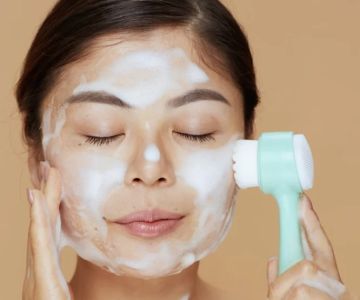

 MD Skin Effects | Botox | Medical Aesthetics4.0 (17 reviews)
 Studio X5.0 (25 reviews)
 Excellent Skin & Body5.0 (7 reviews)
 Alinea Medical Spa Acne Scar & Laser Skin Care NYC4.0 (126 reviews)
 Lashes by Mackenzie0.0 (0 reviews)
 Beyond Image Medical Spa3.0 (5 reviews)
 How to Achieve Clear Skin and Reduce Breakouts with Regular Skincare
 How to Protect Your Skin From Night Creams to Improve Blackheads
 How To Heal Your Whiteheads With These 15 Tips
 Best Practices for Scars Effectively: Tips and Treatments for Scar Reduction
 How to Achieve Smooth and Flawless Skin with a Simple Regimen
 Ultimate Guide to Age Spots: How to Treat and Prevent Them Effectively