
Makeup Brush Care: Wash, Dry, Store, and Replace
On this page
- Quick answer
- Why brush care belongs in skin care
- Set a schedule based on use
- Wash without soaking the construction
- Dry completely with airflow
- Separate clean, used, and travel tools
- Know when cleaning is no longer enough
- Pause use when skin or eyes react
- Frequently asked questions
- Sources and evidence notes
- Conclusion and next steps
Quick answer
Wash makeup brushes on a schedule matched to how they are used, especially tools that contact liquid products, eyes, lips, acne-prone skin, or shared kits. Use a cleaner compatible with the fibers and adhesive, rinse without soaking the ferrule, reshape the bristles, and dry completely with airflow. Store clean tools separately from used ones, never share without proper sanitation, and replace shedding, cracked, odorous, or misshapen brushes.
Why brush care belongs in skin care
Makeup brushes collect product, skin oils, moisture, dust, and environmental residue. Repeated use without suitable cleaning can change application, irritate sensitive skin, and move material between products, tools, and faces.
This guide is for personal makeup tools in the United States. Professional kits, shared testers, medical camouflage, lash tools, sponges, electronic brushes, and specialty materials can require stricter or different sanitation procedures.
Set a schedule based on use
- Clean brushes more often when they contact liquid or cream products.
- Give eye and lip tools special attention because they touch sensitive areas and moist products.
- Wash after any use on irritated, infected, or broken skin only under appropriate professional guidance.
- Do not return a used brush directly to a clean storage cup.
- Keep a simple rotation so one set can dry completely while another is in use.
- Professional artists should follow applicable licensing, client, product, and public health requirements.
Wash without soaking the construction
- Wash hands and clear a clean sink area.
- Check the brush maker's instructions for natural or synthetic fibers and specialty handles.
- Wet the bristles with lukewarm water while keeping the ferrule and handle as dry as practical.
- Work a small amount of compatible cleanser through the bristles without crushing them.
- Rinse until water and product residue run clear.
- Press out water gently with a clean towel and reshape the brush head.
Soaking the entire brush can swell wood, loosen adhesive, trap water, and damage the finish.
Dry completely with airflow
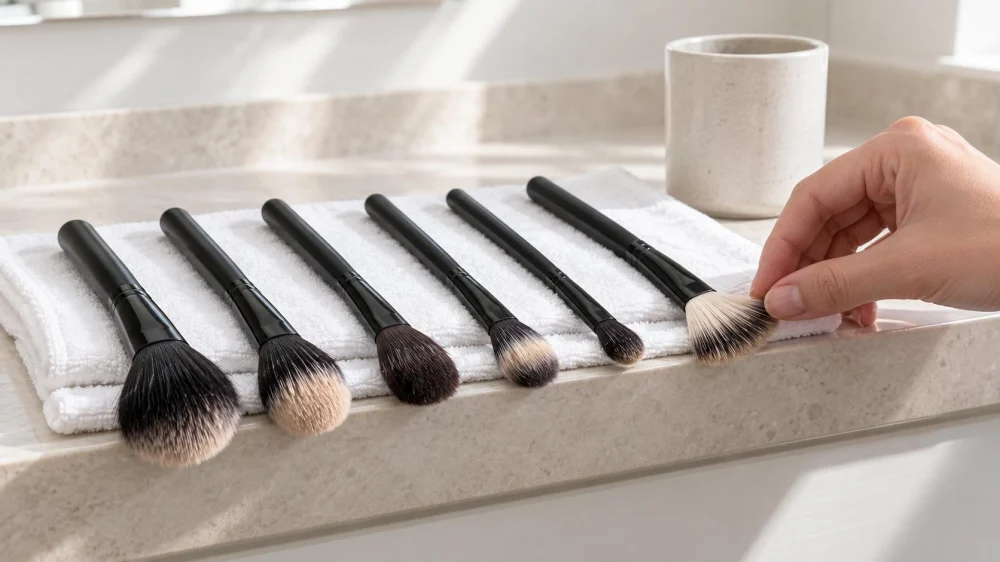
Lay brushes horizontally on a clean dry towel with bristles extending beyond the counter edge, or use a rack that keeps moisture from draining into the ferrule. Space brush heads so air can circulate. Turn them as needed and allow enough time for the center to dry.
Avoid closed containers, drawers, makeup bags, high heat, hair dryers, and upright drying when water can run into the handle. Do not use a brush that still feels cool, damp, or heavy inside.
Separate clean, used, and travel tools
- Store clean dry brushes in a clean covered holder or case with room around the bristles.
- Use a separate washable pouch for used travel brushes.
- Keep tools away from toilet spray, sink splashes, open windows, pets, and loose powders.
- Wash holders and bags on their own schedule.
- Do not share personal brushes, mascara wands, lip tools, or sponges.
- Use disposable single-use applicators correctly when a product must be shared.
Know when cleaning is no longer enough
Replace a brush that sheds repeatedly, has sharp or broken fibers, a cracked handle, loose ferrule, exposed adhesive, persistent odor, staining with unknown residue, or a head that cannot return to shape. Discard tools contaminated by a product recall or an infection as advised by a clinician or public health guidance.
Do not repair a face or eye brush with household glue, tape, or wire that can contact skin.
Pause use when skin or eyes react
Stop using the brush and new cosmetics if you develop burning, swelling, hives, a worsening rash, eye redness, drainage, pain, or another unexpected reaction. Wash hands, avoid sharing tools, and seek appropriate medical advice. Emergency care is needed for trouble breathing, facial or throat swelling, fainting, or severe eye injury.
Cleaning the brush does not prove the cosmetic itself is safe or suitable. Check product dates, recalls, ingredient concerns, and contamination separately.
Frequently asked questions
Can I dry brushes upright in a cup?
Not while wet if water can run into the ferrule. Dry them horizontally or bristles-down using a suitable rack, then store upright only after they are fully dry.
Can I use dish soap?
Use the brush manufacturer's compatible cleanser recommendation. A strong degreaser or fragrance may damage fibers or irritate skin when residue remains.
Does spray cleaner replace washing?
A quick cleaner may help between uses when its instructions allow, but it may not remove all product from dense bristles. Follow with a full wash on the appropriate schedule.
Sources and evidence notes
This article applies general cosmetic tool hygiene and material-care principles: match frequency to exposure, prevent cross-contamination, avoid soaking bonded construction, dry completely, and retire damaged tools. The brush and cosmetic instructions, professional licensing rules, clinician advice, and public health notices govern a specific situation.
Conclusion and next steps
Sort brushes into clean, wash now, and replace groups. Wash one small set using compatible cleanser, protect the ferrules, and give it a full drying day. Then create separate clean and used storage so the routine stays visible. A simple rotation is more reliable than waiting until every brush is heavily coated.



 Diamante Medical Skin Care4.0 (274 reviews)
 Luxe Skin Health0.0 (0 reviews)
 DeRomano Skincare5.0 (4 reviews)
 Celestial Skincare by Angel5.0 (48 reviews)
 Luna Bella Skin Care4.0 (27 reviews)
 Tatianasmedspa5.0 (12 reviews)
 Makeup Brush Care: Wash, Dry, Store, and Replace
 Post-Workout Skin Care: Sweat, Friction, and Cleanup
 Shaving Irritation: Adjust Technique and Know When to Stop
 Lotion, Cream, or Ointment? Compare Moisturizer Textures
 Skin Care Product Recall: Check Lot, Stop Use, Report
 Choosing a Skin Care Service: License, Scope, and Hygiene