
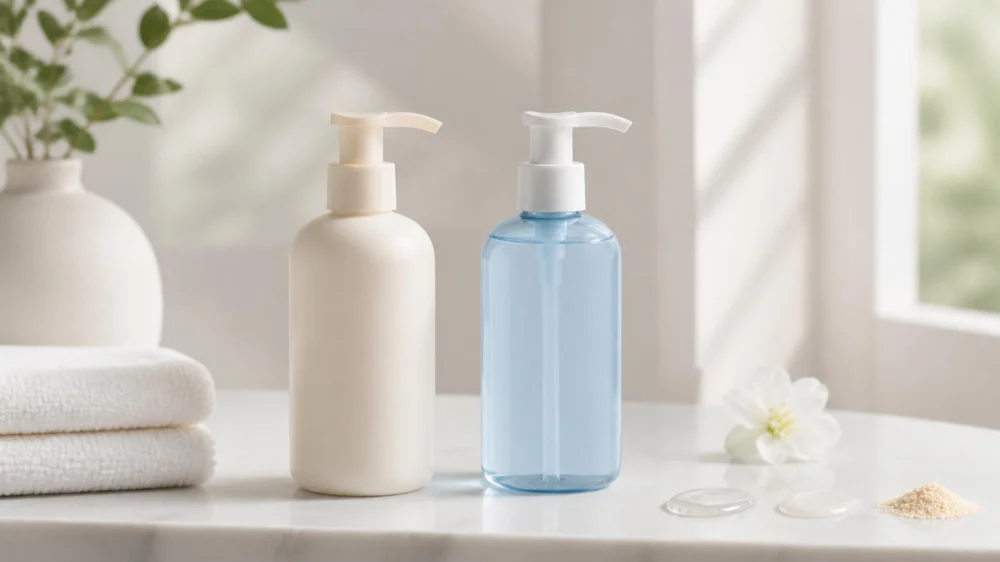
Fragrance-Free vs. Unscented Skin Care: Read the Label
On this page
Quick answer
“Unscented” usually describes the absence of a noticeable smell, not necessarily the absence of fragrance ingredients. The U.S. Food and Drug Administration notes that an unscented cosmetic may contain fragrance used to mask another odor. “Fragrance-free” is a more useful starting point for someone avoiding added fragrance, but FDA also says there is no federal standard or definition governing claims such as fragrance-free, hypoallergenic, or “for sensitive skin.”
Read the full ingredient list, compare the exact formula rather than the front label, and contact the manufacturer when an ingredient or fragrance mixture is unclear. Stop using a product that causes a reaction and seek urgent care for breathing trouble, throat tightness, facial swelling, faintness, or rapidly worsening symptoms.
What the terms may mean
An unscented product is designed to have little or no perceptible odor. A manufacturer may use a fragrance ingredient to cover the natural smell of raw materials without creating a recognizable perfume. Therefore, “I cannot smell it” does not prove the formula contains no fragrance.
A fragrance-free claim generally signals that added fragrance ingredients are not intended, but shoppers still need to read the label. In the United States, FDA explains that there is no federal definition for this claim. Formula changes, botanical extracts, flavor ingredients, and ingredients with more than one function can complicate comparisons.
“Natural,” “clean,” “dermatologist tested,” “hypoallergenic,” and “sensitive skin” do not guarantee that a product is free of allergens or irritation risk. Natural and synthetic fragrance materials can both trigger reactions in susceptible people.
How to review the ingredient list
Find the ingredient declaration on the package or official product page. Terms such as fragrance, parfum, perfume, or aroma deserve attention when avoiding scent. FDA permits a complex fragrance mixture to be listed collectively as “fragrance,” so every component may not appear separately.
Do not assume essential oils, flower extracts, citrus oils, or aromatic botanicals are automatically safer because they sound natural. They may contribute odor or contain substances that irritate or sensitize some users. A dermatologist or allergist can help identify names relevant to a diagnosed allergy.
Compare the ingredient panel every time you repurchase, including the package size and version. “Original,” “gentle,” and “night” formulas from the same brand may differ. Retail descriptions can lag behind reformulation, so the physical package is important.
If fragrance bothers your skin
Keep the routine simple. Select a cleanser, moisturizer, and sunscreen based on need, and avoid adding several unfamiliar products together. A shorter ingredient list is not proof of safety, but fewer simultaneous changes make a problem easier to identify.
Distinguish preference from a prior reaction. Someone who dislikes scent may only need an unscented experience, while a person with suspected allergic contact dermatitis may need stricter avoidance guided by patch testing. A board-certified dermatologist can evaluate persistent eczema, eyelid rash, lip inflammation, or recurring reactions.
Fragrance exposure also comes from hair products, deodorant, laundry products, hand soap, cleaning spray, candles, and products used by household members. Changing skin care alone may not remove every trigger.
Introduce a new product carefully
Read directions and warnings before use. Test one new leave-on product at a time and avoid applying it first to irritated, freshly shaved, sunburned, or broken skin. A small-area trial can reveal obvious irritation but cannot guarantee that allergy will never develop.
Use the product at the intended frequency rather than applying extra to “test faster.” Do not combine several exfoliants, retinoids, acne treatments, or fragranced products when evaluating tolerance. Keep the package and note the first-use date.
For a history of significant allergy or widespread dermatitis, ask a dermatologist how to test products. Professional patch testing is different from a casual home spot test and can identify specific contact allergens.
What to do after a reaction
Stop the suspected product and rinse gently with lukewarm water if exposure was recent. Do not scrub, exfoliate, or cover the area with multiple new remedies. Save the package, ingredient list, lot number, receipt, and photos of the reaction.
Contact a clinician for a persistent, spreading, blistering, painful, infected-looking, eye-area, or recurrent rash. Get urgent medical help for trouble breathing, throat tightness, tongue or facial swelling, wheezing, dizziness, fainting, or rapid progression.
Report serious cosmetic problems to FDA through MedWatch and contact the manufacturer. A report should include the exact product, how it was used, timing, symptoms, treatment, and lot information when available.
A practical shopping method
- Define the goal: no noticeable scent, no added fragrance, or avoidance of a diagnosed allergen.
- Ignore front-label imagery and read the claim plus ingredient declaration.
- Compare the exact size and formula on the physical package.
- Search for collective fragrance terms and any personal allergens.
- Ask the manufacturer a specific written question if uncertain.
- Keep the answer and product lot with your records.
- Introduce one product at a time and track response.
If a manufacturer cannot clarify whether a product meets your avoidance need, choose a different product rather than inferring from marketing language.
Label-reading checklist
- Is the product fragrance-free, unscented, or merely described as gentle?
- Does the ingredient list include fragrance, parfum, perfume, or aroma?
- Are aromatic oils or extracts relevant to your known allergy?
- Has the package or formula changed since the last purchase?
- Can the manufacturer explain a masking fragrance or mixture?
- Are directions, warnings, lot code, and contact details readable?
- Are you changing only one routine product at a time?
Frequently asked questions
Does unscented mean fragrance-free?
No. FDA says an unscented product may contain fragrance ingredients that mask other odors.
Is fragrance-free legally standardized in the United States?
FDA says no federal standard or definition governs this cosmetic claim, so read ingredients and ask questions.
Can essential oils cause fragrance reactions?
Yes. Natural origin does not rule out irritation or allergy.
Does hypoallergenic mean no allergic reaction?
No. It is not a guarantee, and FDA does not define the claim by a federal standard.
Can fragrance be listed as one word?
Yes. FDA permits many components of a fragrance formula to be declared collectively as “fragrance.”
Should I throw out every scented product?
Not automatically. Match avoidance to your goal and medical history; seek specialist advice for diagnosed or recurrent allergy.
Sources and evidence notes
The U.S. Food and Drug Administration explains that unscented cosmetics may contain fragrance to mask odors and that fragrance formulas may be listed collectively. See FDA guidance on fragrances in cosmetics.
FDA’s allergen guidance says there is no federal standard or definition governing terms such as fragrance-free, hypoallergenic, or “for sensitive skin,” and recommends reading labels and contacting manufacturers when needed. See FDA allergens in cosmetics guidance.
Conclusion and next steps
Use fragrance-free as a starting point, not a guarantee, and do not equate unscented with no fragrance ingredients. Read the current ingredient panel, ask the manufacturer about unclear mixtures, introduce one product at a time, and preserve records if a reaction occurs. Seek medical help promptly for serious or persistent symptoms.


 The Melanated Esthi4.0 (14 reviews)
 Made In Miami MD4.0 (17 reviews)
 Johanna's Skin Care5.0 (5 reviews)
 Iuliana Skin Care Studio4.0 (97 reviews)
 DF - Skin Beauty Aesthetics Advanced5.0 (26 reviews)
 Invigorate Spa4.0 (329 reviews)
 How To Heal Your Redness With These 5 Tips | Expert Skincare Advice
 Effective Ways to Improve Your Dry Skin with These 12 Tips
 Common Mistakes in Using Chemical Exfoliants to Improve Redness
 How To Choose the Right Physical Exfoliants to Improve Scars
 How to Treat and Prevent Acne Scars with Consistent Skin Care
 How To Prevent Scars With A Simple Routine