
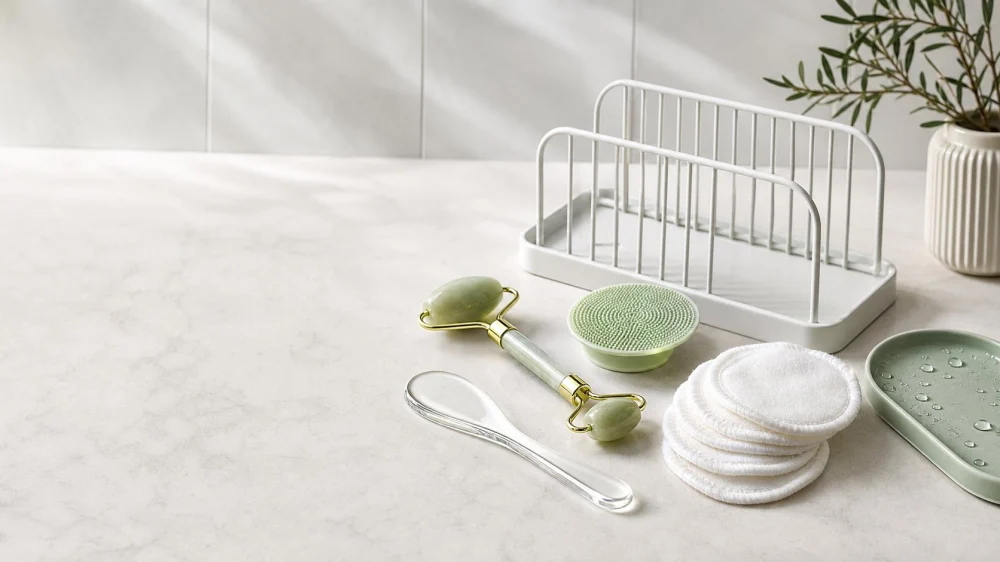
How to Clean Reusable Skincare Tools Safely
On this page
Quick answer
Clean reusable skincare tools after each use when they touch skin or wet product: remove residue, wash according to the manufacturer’s directions, rinse thoroughly, and let every surface air-dry before storage. Never share personal tools. Discard items with cracks, rust, persistent odor, shedding material, or surfaces that no longer clean completely, and keep microneedling or other skin-penetrating devices out of a casual home-cleaning routine.
Tools and contamination risks
A reusable skincare tool is an applicator, cleansing aid, massage device, or accessory designed for repeated contact with the skin or a cosmetic product. Examples include silicone cleansing pads, facial rollers, gua sha tools, product spatulas, reusable cotton rounds, washcloths, and removable device heads.
Moisture, skin oils, makeup, and product residue can remain on a tool. The practical goal is not to make every household item medically sterile; it is to remove soil, follow the tool maker’s cleaning method, dry the item fully, and avoid transferring residue between people, products, or irritated areas.
This guidance is for intact, noninvasive consumer tools. It does not cover instruments used in clinics or devices that puncture, abrade, heat, freeze, or deliver electrical energy to skin.
Safe cleaning steps
- Check the instructions first. Confirm whether the item can be submerged, machine-washed, exposed to soap, or treated with a specific disinfectant. Water can damage motors, batteries, adhesives, coatings, and porous stone.
- Wash your hands. Handle the tool with clean hands and work on a clean surface.
- Remove visible residue. Rinse or wipe away makeup, cleanser, oil, and loose debris without forcing water into electrical openings.
- Clean every contact surface. Use the approved cleanser, temperature, and contact time. Pay attention to seams, handles, and removable heads.
- Rinse if required. Leftover soap or cleaning solution can irritate skin and damage some materials.
- Dry completely. Place the item on a clean, dry surface with airflow. Do not seal a damp tool in a pouch or bathroom drawer.
- Store separately. Keep clean tools away from used makeup, wet counters, toilets, and unwashed items.
Tool-by-tool checklist
- Reusable pads and washcloths: use a fresh one for each session, launder with detergent according to the fabric label, and dry fully. Avoid fabric softener if the maker warns it reduces absorbency.
- Silicone cleansing pads: wash grooves carefully and inspect them under good light. Replace the pad if tears or sticky areas trap residue.
- Rollers and gua sha tools: wipe or wash as their material instructions allow. Do not soak a tool with glued joints, metal hardware, or porous stone unless the maker approves it.
- Cosmetic spatulas: use a clean, dry spatula instead of fingers, wash it after contact, and never return removed product to the original jar.
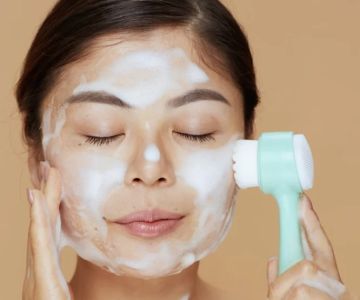
- Powered brushes: detach only approved parts. Clean the head, keep the handle and charging contacts dry as directed, and replace worn heads on the maker’s schedule.
Best for reuse: intact, nonporous tools with clear cleaning directions. Not ideal for reuse: damaged porous items, disposable applicators, or anything labeled single-use.
When to replace or discard
Discard a tool when it is cracked, chipped, rusted, warped, permanently stained, sticky, shedding fibers, or still smells after proper washing and drying. Replace detachable heads when bristles splay, silicone splits, performance changes, or the manufacturer’s replacement interval arrives. A tool that cannot be inspected or cleaned throughout should not be used on irritated or broken skin.
Also discard an item after contamination that its instructions do not explain how to handle—for example, contact with bodily fluids or use during a contagious skin infection. Do not try to rescue a low-cost item with an unapproved harsh chemical.
Important limits and safety boundaries
Do not share skincare tools, even after a quick wipe. Do not use household bleach, boiling water, alcohol, or a dishwasher unless the manufacturer specifically approves that method and concentration. “Antibacterial” labeling does not remove the need for cleaning and drying.
Microneedling rollers and other devices that penetrate the skin have infection, injury, and sterilization concerns beyond ordinary cosmetic accessories. Ask a licensed dermatologist or appropriately qualified professional whether the device is suitable and how it should be handled. Stop using any tool that causes bleeding, persistent pain, swelling, blistering, or a worsening rash; seek medical care when symptoms are severe or do not improve.
Sources and evidence notes
This checklist reflects broad hygiene principles, common cosmetic-tool care, textile laundering practice, and manufacturer guidance. Material-specific instructions take priority because stone, silicone, metal, fabric, electronics, adhesives, and coatings tolerate different cleaning methods. This article does not claim that household cleaning sterilizes a device or prevents every skin problem.
Frequently asked questions
How often should I wash a facial roller?
Clean it after each use or according to its instructions, especially after contact with oil, serum, makeup, or irritated skin. Dry joints and handles fully.
Can I clean every tool with rubbing alcohol?
No. Alcohol can damage finishes, adhesives, porous materials, and electronics, and an incorrect method may leave areas untreated. Use it only when the maker specifically directs it.
Is storing tools in the bathroom safe?
A clean, closed container outside splash zones is better than an open counter. The tool must be completely dry before it is enclosed.
Can reusable pads go in a laundry bag?
Many can, and a mesh bag can keep small pads together, but follow the fabric label for water temperature, detergent, and drying.
Should I disinfect a tool after acne use?
Cleaning directions depend on the material and device. Avoid using tools over open, draining, or painful lesions, and ask a dermatologist about recurring or severe acne rather than relying on aggressive tool disinfection.
Conclusion and next steps
Make tool care part of the skincare session: clean promptly, rinse as directed, air-dry completely, inspect, and store separately. Keep the product manual or photograph its care label. If instructions are missing, contact the manufacturer or replace the tool instead of improvising a method that could damage it or your skin.



 Eternal Youth Plasma Skin Tightening Therapy5.0 (25 reviews)
 Lumiere Skin LLC5.0 (7 reviews)
 Dahlia Aesthetics LI, Inc5.0 (7 reviews)
 Grounded & Glowing5.0 (19 reviews)
 Tampa SKN Studio5.0 (11 reviews)
 Piel Acne and Skin Center4.0 (7 reviews)
 Skin Care Tips For Dry Skin Effectively
 Effective Skin Care Tips for Scars: Healing and Improving Appearance
 How to Use Essential Oils for Skin Healing and Relaxation
 Skin Care Tips For Eczema: What You Need To Know
 How To Brighten Dark Circles For Teens – Effective Tips & Tricks
 How To Detoxify Physical Exfoliants For Large Pores Skin