
Skincare Sample Hygiene: Testers, Sachets, and Tools
On this page
Quick answer
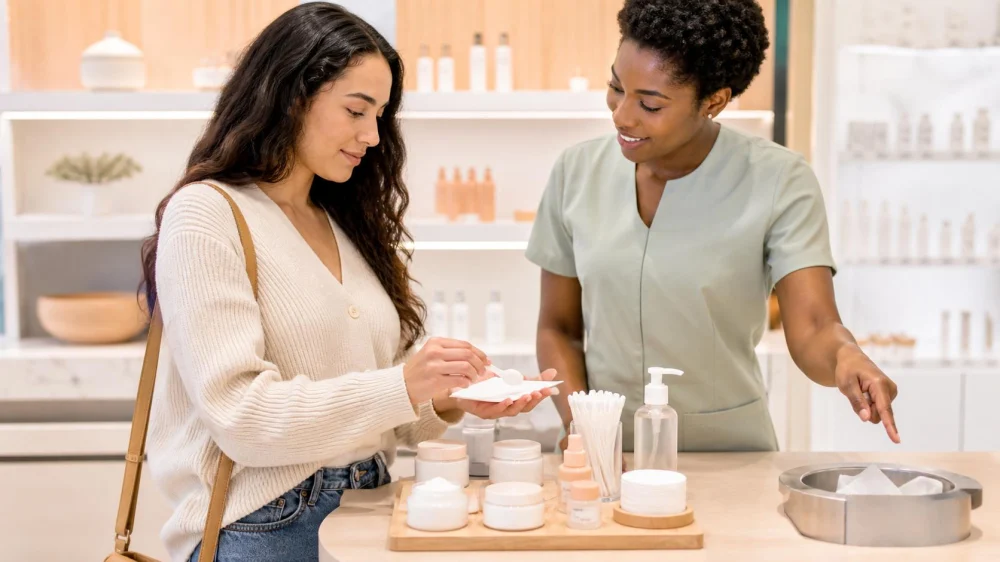
Prefer sealed, single-person skincare samples. At a shared tester, clean your hands, use a fresh disposable applicator, transfer product once without touching the container opening, and discard the tool immediately. Do not double-dip or apply communal testers directly to lips, eyes, broken skin, or an irritated area. Skip products with missing labels, damaged packaging, unusual changes, or unclear handling.
Know the sample type
A skincare sample is a smaller quantity of a product supplied for limited evaluation, while a tester is a display unit that may be handled by multiple people. Their contamination risk and useful life are not identical.
- Sealed sachet: single small packet, often intended for one or a few uses after opening.
- Mini container: take-home bottle, tube, pump, or jar intended for one person.
- Staff-dispensed sample: product transferred into a clean smaller container.
- Shared tester: retail display handled repeatedly, with hygiene depending on packaging and store process.
Read the product identity, ingredient list, directions, warnings, and any expiration or period-after-opening information supplied. A mystery sample is not useful enough to justify applying it.
Use counter testers carefully
Ask staff how testers are cleaned, monitored, and replaced. Pumps and squeeze tubes can reduce direct contact when their nozzles remain clean, but they are not automatically contamination-free. Open jars require a fresh spatula for every transfer.
- Clean and dry your hands.
- Inspect the label, opening, product appearance, and surrounding station.
- Take one fresh disposable spatula, swab, pad, or other appropriate tool.
- Dispense or lift a small amount without touching the product with skin.
- Place it on a clean sample card or intact skin area away from eyes and lips when appropriate.
- Discard the tool immediately; never return it to the container.
- Close the package if the display design and store instructions permit.
Do not use a tester after another shopper has dipped fingers into it, touched a nozzle to skin, or reused an applicator. Tell staff so they can handle the unit according to store policy.
Handle take-home samples
Write the product name and date received or opened on an unlabeled sample only if the dispenser supplies the missing identity and directions. Keep it closed, dry, and away from excessive heat, direct sun, and contamination. Do not share it after use.
For a jar, use clean, dry hands or a clean spatula. For a tube or pump, do not wipe the opening with a used finger or cloth. Avoid adding water or mixing another product into the container, which can change preservation and performance.
A small sample may not contain enough product to judge long-term benefit, but it can reveal texture, scent, finish, packaging compatibility, and some immediate tolerance issues. Absence of an immediate reaction does not guarantee future tolerance.
Match tools to application zones
Lip and eye products deserve extra caution because mucous membranes and delicate nearby skin are involved. Avoid shared products applied directly from a wand, stick, pencil, roller, or brush. A disposable wand is useful only when it enters product that has not already been contaminated by a reused applicator.
Do not test on cuts, cracked lips, active rash, sunburn, freshly shaved or waxed skin, or an area affected by infection. Do not use a facial tester as a substitute for a product intended for another body area.
Know when to discard
Do not use a sample or tester when:
- the product name, ingredients, or directions cannot be identified;
- the seal or container is broken, leaking, swollen, or damaged;
- color, odor, texture, or separation looks unexpectedly changed;
- the opening is crusted, dirty, or has visible foreign material;
- you saw direct contact or double-dipping;
- the age or storage history is unknown and the product appears questionable;
- the product causes concerning pain, burning, swelling, hives, breathing symptoms, or worsening irritation.
Stop use and wash off as directed when a reaction occurs. Seek prompt medical help for severe or systemic symptoms. Keep the package information for a healthcare professional or report when appropriate.
Sample-use checklist
- Prefer sealed single-person packaging.
- Verify identity, ingredients, directions, and warnings.
- Inspect the container and product.
- Clean hands and use a new tool.
- Transfer once; never double-dip.
- Avoid eyes, lips, broken skin, and active irritation with shared testers.
- Record opening details for take-home minis.
- Stop for a reaction and keep identifying information.
Limitations and important notes
Clean handling reduces avoidable contact but cannot prove that a shared tester is sterile or that a product will suit an individual. Preservatives, packaging, store practices, ingredients, skin condition, allergy history, and medication all affect risk.
For eczema, severe allergies, immune concerns, eye disease, active infection, or clinician-directed skin treatment, ask an appropriate healthcare professional before experimenting. General hygiene advice does not replace diagnosis or treatment.
Frequently asked questions
Is a pump tester always safe?
No. It reduces access to the main container, but the nozzle and surrounding station can still be touched or dirty. Inspect it and dispense without contact.
Can I sanitize a lipstick tester?
A retail sanitation process depends on product design and store protocol. Do not improvise or apply a shared stick directly. Prefer a sealed personal sample.
Can I save an opened sachet?
Follow its directions. An open packet may be difficult to close without exposure. Transfer only if the brand permits and the new container is suitable; otherwise use within the stated period or discard.
Does a hand test prove a face product is safe?
No. Skin sites differ, and reactions can be delayed. A small trial provides limited information and cannot rule out allergy or irritation.
Should I share a take-home sample?
No. Once opened and used, keep it to one person to avoid cross-contact and confusion about handling.
Evidence and practice notes
This guide follows common cosmetic hygiene principles: favor single-user packaging, avoid direct contact with bulk product, use one clean applicator per transfer, protect sensitive application zones, and discard compromised items.
No packaging format or preservative system is claimed to eliminate contamination or guarantee tolerance.
Next steps
Build a small sample kit with clean hands, disposable spatulas, sample cards, and a waste pouch. At a store, ask for a sealed mini or staff-dispensed sample before using an open tester.
At home, keep one sample at a time with its identity and opening date. That makes hygiene, reaction tracking, and comparison clearer than opening several unfamiliar products together.


 Pure Skin by Agnes Spa Natural remedies5.0 (16 reviews)
 Complexionsbycaylee- Dublin Holistic Esthetician & Acne Specialist5.0 (10 reviews)
 Spring Street Dermatology - SOHO4.0 (1060 reviews)
 The Medical Institute of Anti-Aging1.0 (1 reviews)
 Purie Paramedical Skin & Body Care, Inc.5.0 (14 reviews)
 Skin Shine Bar4.0 (6 reviews)
 Expert Advice on Puffy Eyes with a Simple Routine | Effective Eye Care Tips
 Skin Care Tips For Facial Oils To Improve Large Pores
 Ultimate Guide To Your Dry Skin With These 10 Tips
 How to Use Exfoliants Without Damaging Your Skin
 Best Practices For Face Masks To Improve Dull Skin
 How To Heal Your Redness With These 5 Proven Skin Tips