
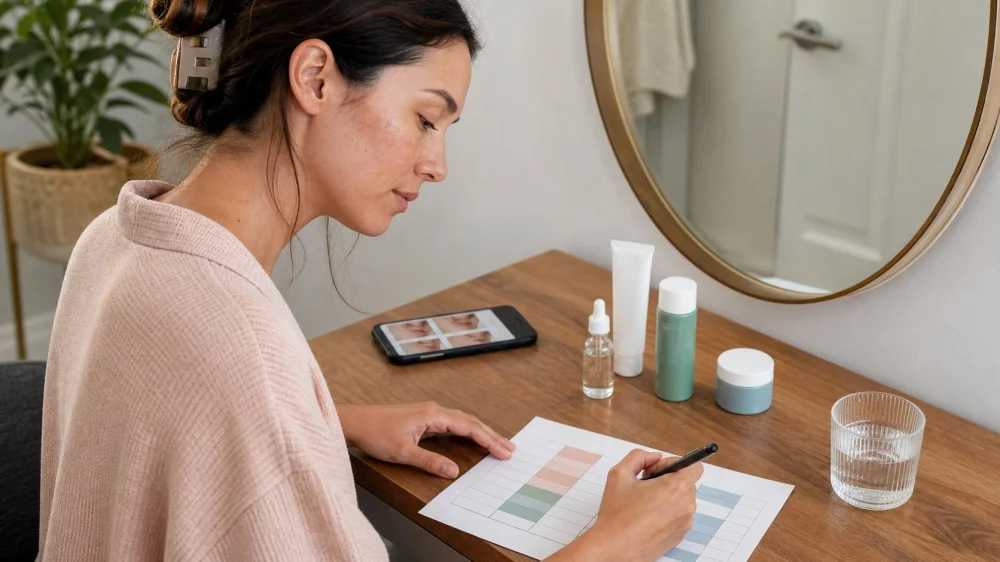
Skin Care Routine Log: Track Products and Reactions
On this page
Quick answer
A useful skin care log records the exact product, amount, timing, application area, symptoms, and other changes without trying to diagnose them. Establish a simple baseline, introduce one optional change at a time, and take photos under consistent conditions. Stop a suspected product when directed or when concerning symptoms occur, and bring the concise timeline and original labels to a qualified clinician.
What a routine log can do
A skin care routine log is a dated record of products, use patterns, visible changes, and symptoms. It can reveal when several variables changed together, preserve details that are easy to forget, and help a dermatologist or other qualified clinician understand the timeline.
A log cannot prove that one product caused a reaction. Skin changes may relate to weather, illness, hormones, medication, stress, sleep, friction, sun exposure, work, travel, or an underlying condition. Improvement after stopping a product and recurrence after restarting may look suggestive, but deliberate re-exposure can be unsafe and should not be attempted without professional guidance.
This method is best for organizing routine observations. It is not appropriate as a reason to delay care for a severe, rapidly changing, painful, infected, eye-area, or systemic reaction.
Build a baseline first
Before adding a new optional product, record several days of the existing routine when practical. List every product that touches the area, including cleanser, moisturizer, sunscreen, makeup, hair products, shaving products, fragrance, laundry products, topical medicine, adhesive, and wearable devices.
Record the exact product name, formula or shade when relevant, ingredient list photo, lot number, expiration or opening date, and where it was purchased. Similar packaging can hide a reformulation or different strength.
Describe the skin without judgment:
- location and side of the body;
- dryness, oiliness, flaking, bumps, redness, swelling, cracking, or drainage;
- itch, burning, pain, tightness, or tenderness;
- sleep or activity disruption;
- usual triggers and current treatment plan.
Use the same plain terms over time. Avoid assigning labels such as allergy, purge, infection, or breakout unless a clinician has evaluated the condition.
What to record each day
Keep the entry brief enough to maintain. A practical template includes:
- Date and morning or evening.
- Product and exact amount or number of pumps.
- Application order and waiting time when relevant.
- Area applied and whether skin was wet or dry.
- Immediate sensation during the first hour.
- Later visible change and symptom severity using one consistent scale.
- Sun exposure and sunscreen use.
- Heat, cold, humidity, wind, swimming, sweating, mask, glasses, or wearable friction.
- Shaving, hair removal, facial, peel, procedure, or new laundry or hair product.
- Medication or health changes discussed with a clinician.
Do not record every meal, mood, and activity unless there is a clear reason. Excess data can bury the most useful variables and encourage false connections.
Take comparable photos
Photos help only when conditions are similar. Choose one private location and use the same:
- camera and normal lens setting;
- distance, angle, and head position;
- time of day and neutral lighting;
- background;
- clean, product-free or consistently timed skin state;
- front, left, right, and close detail views as needed.
Turn off beauty filters, portrait smoothing, color filters, and automatic retouching. Avoid digital zoom. Bright bathroom light, window light, flash, moisture, and camera processing can change apparent color and texture.
Do not post photos publicly for diagnosis. A clinician may need to examine texture, temperature, tenderness, distribution, and other features that a photo cannot capture.
Evaluate one change at a time
When a new optional cosmetic product is appropriate, add only one change while keeping cleanser, moisturizer, sunscreen, and other routine elements stable. Follow the label’s amount and frequency rather than using extra product to speed results.
Record the first use and any skipped days. Do not add a second active product merely because nothing changed immediately. Some outcomes take time, while irritation can appear after repeated exposure.
A small-area use test may reveal some immediate irritation but cannot guarantee that full-face or long-term use will be safe. Allergy patch testing performed by a clinician is a different medical process. Ask a dermatologist about testing when allergy is suspected.
Do not change a prescribed treatment schedule for the sake of a cleaner experiment. Follow the prescriber’s plan and contact the clinic about problems.
Interpret patterns cautiously
Review the log weekly rather than reacting to every mirror check. Ask:
- Did the change begin before or after the product?
- Was the same area exposed consistently?
- Did dose or frequency change?
- Were weather, friction, procedure, illness, or another product different?
- Did symptoms continue on days the product was not used?
- Are photos truly comparable?
Correlation is not causation. Several products may share an ingredient, and the packaging, applicator, or contamination may matter. A product may also reveal an existing condition by irritating already vulnerable skin rather than being the sole cause.
Summarize the timeline for a visit: baseline, first exposure, first symptom, peak, actions taken, and current state. Bring product packages or clear label photos.
When to stop and seek help
Follow the label and clinician’s instructions for stopping. In general, discontinue an optional cosmetic product and seek advice when it causes persistent burning, increasing redness, swelling, blistering, cracking, drainage, severe pain, or a rapidly spreading reaction.
Seek urgent or emergency care for trouble breathing, swelling of the lips, tongue, face, or throat, faintness, widespread hives with systemic symptoms, severe eye involvement, or another rapidly worsening reaction. Do not wait to finish the log.
Contact a clinician for persistent or recurrent changes, suspected infection, scarring, significant pigment change, sleep-disrupting itch, or a condition that is not improving with the agreed plan. Avoid deliberate re-challenge after a serious reaction.
Store the log privately
Skin photos can identify a person through face, tattoos, background, metadata, and timestamps. Store them in a secured device or health-record system and limit cloud sharing.
Use neutral filenames, remove unrelated personal information before sending, and confirm the clinic’s secure upload method. Keep original image files if a clinician needs timing or camera context.
Product logs may include prescriptions and health information. Do not place a full public link in a review or social post. Share only with people involved in care.
Sources and evidence notes
This method follows broad clinical-history and observation principles: record exposure before outcome, change fewer variables, use consistent descriptions and images, and separate timing from proof of cause.
Product labels and manufacturers provide directions, ingredients, and storage. Prescribing clinicians guide medication. Dermatologists and other qualified professionals diagnose persistent or severe skin conditions and determine whether formal allergy testing is appropriate.
Frequently asked questions
How long should I keep a skin care log?
Keep it long enough to capture the timeline relevant to your goal or clinician’s plan. Stop when the record no longer informs a decision.
Should I rate symptoms from one to ten?
A consistent scale can help, but add observable details such as sleep disruption, area size, or need to stop an activity.
Can photos diagnose a reaction?
No. They preserve visible appearance but miss sensation, texture, temperature, history, and other clinical information.
What if I changed several products at once?
Record all changes and dates. Return to a clinician-approved simple routine rather than guessing which product to challenge again.
Does tingling mean a product is working?
Not necessarily. Sensation does not prove effectiveness and can signal irritation. Follow the label and seek advice if it persists or worsens.
Conclusion and next steps
A useful skin care log is simple, consistent, and descriptive. It records exact products, timing, amount, symptoms, context, and comparable photos without turning observations into a diagnosis.
Your next step is to list the current routine, take one baseline photo set, and choose a short daily template. Keep optional changes separate, stop when warning signs appear, and bring a one-page timeline and original labels to professional care when needed.



 Divine Aesthetics, Inc5.0 (6 reviews)
 Skin Care Essentials0.0 (0 reviews)
 Mallory Marie Lashes & Skincare5.0 (20 reviews)
 Elena's Skin Care Specialist4.0 (41 reviews)
 Healthy Skin By Leah LLC0.0 (0 reviews)
 Baby face skin care5.0 (4 reviews)
 The Benefits of Vitamin C for Your Skin and How to Use It
 The Best Skin Care Treatments for Dull and Uneven Skin Tone
 Face Feels Tight After Cleansing: What to Change First
 How To Reduce Dull Skin With A Simple Routine
 How to Incorporate CBD Into Your Skin Care Routine
 Skin Care After Swimming: Rinse, Dry, and Moisturize