
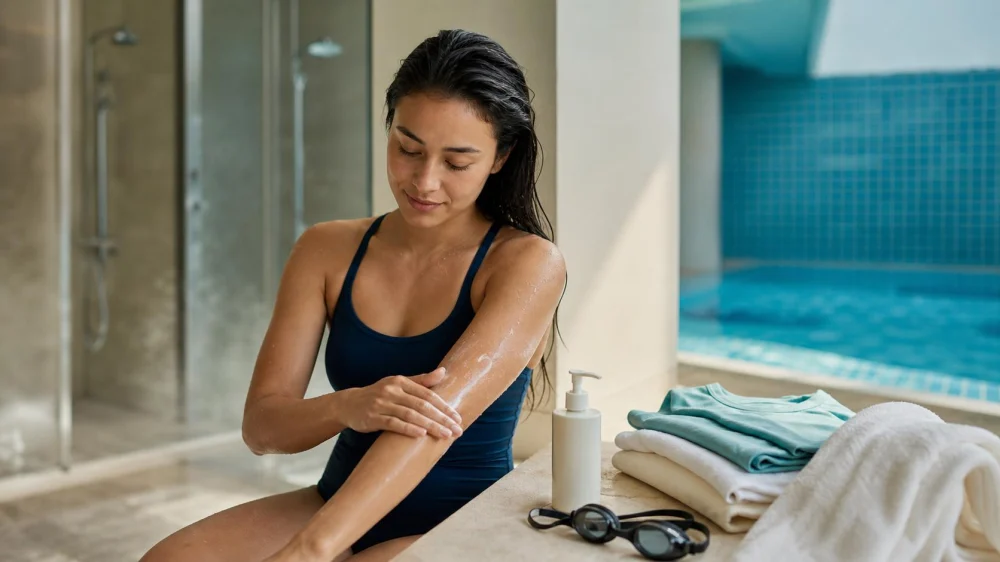
Skin Care After Swimming: Rinse, Dry, and Moisturize
On this page
Quick answer
After swimming, rinse skin promptly with warm—not hot—fresh water, pat rather than rub, and apply a familiar fragrance-free moisturizer while skin is still slightly damp. Before swimming, take the facility’s rinse shower and use sunscreen outdoors; people with eczema may need a clinician-approved barrier ointment. Change out of wet swimwear, wash it, and monitor persistent itching, rash, hives, breathing symptoms, drainage, or painful skin instead of repeatedly adding new products.
Why pool water can irritate
Pool disinfectants help control germs, but chlorine can combine with sweat, urine, dirt, skin cells, deodorant, and makeup to form chloramines. CDC notes that chloramines can irritate eyes, lungs, and skin.
Water exposure, repeated showering, friction, wet fabric, and cleansing can also leave skin dry. People with eczema or a disrupted skin barrier may notice tightness, itching, redness, or a flare.
A strong “chlorine” odor can indicate chloramines rather than proof that the pool has enough free chlorine. Tell pool staff about strong chemical odors or irritation and leave the area if symptoms occur.
Prepare before you swim
Take a one-minute rinse shower before entering. CDC states that this removes much of the material that contributes to chloramine formation. Remove makeup and excess skin products when practical.
For outdoor swimming, apply broad-spectrum sunscreen and follow its timing, water-resistance, and reapplication directions. Add shade, protective swimwear, a hat when out of the water, and sunglasses.
If you have eczema, ask a dermatologist whether applying your usual moisturizer or a thin layer of petroleum jelly before swimming fits your plan. Do not enter a pool with infected, oozing, severely flared, open, or raw skin without clinical advice.
Rinse promptly afterward
Use warm fresh water as soon as practical. Hot water can worsen dryness and itching. A gentle fragrance-free cleanser may be useful on sweaty, oily, or visibly soiled areas, but full-body scrubbing and harsh soap are unnecessary for many people.
Rinse skin folds, under swimwear edges, and areas beneath straps. Avoid loofahs, rough exfoliating gloves, and vigorous rubbing on irritated skin. Pat with a clean towel and leave skin slightly damp.
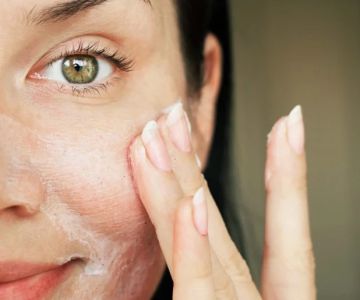
Rinse the face carefully and remove water-resistant sunscreen according to its instructions using a familiar gentle cleanser. Keep pool water and cleanser out of the eyes. Persistent eye pain or vision change needs prompt assessment.
Moisturize damp skin
Apply a familiar fragrance-free cream or ointment soon after rinsing. The American Academy of Dermatology advises moisturizing a child with eczema within three minutes of rinsing, while the skin remains damp. A similar rinse-pat-moisturize sequence can be a practical routine for dry sensitive skin.
Use gentle, broad strokes instead of rubbing. Apply more to areas that usually crack or itch. Avoid introducing acids, retinoids, scrubs, fragranced oils, or multiple new actives immediately after a swim if skin already feels irritated.
Moisturizer treats dryness, not infection or a chemical injury. Stop a product that burns persistently or causes swelling or hives.
Handle swimwear and gear
Change out of wet swimwear soon after leaving the pool. Rinse or wash it according to the garment label and let it dry fully. Rewearing damp fabric can increase friction and prolonged chemical contact.
Rinse goggles, swim caps, flotation gear, and reusable towels. Check elastic, rubber, adhesives, and metal parts that touch recurring rash areas. A reaction limited to one outline may relate to friction, pressure, trapped moisture, or a material sensitivity rather than the pool water alone.
Use a clean towel and do not share personal products when skin is broken or infection is possible.
Adjust for eczema and sensitive skin
Keep the routine predictable: the same gentle cleanser, moisturizer, and prescribed treatments. Record the pool, swim duration, water temperature, products, and symptoms if flares repeat.
Follow the eczema action plan for prescribed topical medicines. Do not increase frequency, cover treated skin, or mix medication with moisturizer unless the prescriber has explained how.
Shorter sessions, immediate rinsing, a barrier plan, and a different facility may help identify triggers. A dermatologist can distinguish irritant dermatitis, allergic contact dermatitis, infection, eczema, and other causes that look alike.
Recognize warning signs
Seek urgent help for trouble breathing, wheezing, faintness, facial or tongue swelling, or rapidly spreading hives. Leave an indoor pool area if fumes trigger coughing, chest tightness, or asthma symptoms and follow the asthma action plan.
Contact a clinician for a rash that is severe, painful, blistering, oozing, spreading, associated with fever, or not improving with the usual care plan. Tender bumps around hair follicles, crusting, drainage, and worsening warmth may need evaluation.
Limitations and important notes
This routine addresses common dryness and irritation, not every swimming-related rash. Pools, hot tubs, lakes, and oceans have different exposures. Hot-tub folliculitis, swimmer’s itch, jellyfish stings, infections, and chemical spills need different guidance.
Follow facility rules and public-health notices. Never mix pool chemicals or try to adjust a facility’s water yourself.
Sources and evidence notes
CDC explains how chloramines form and recommends showering before swimming. The American Academy of Dermatology advises children with eczema to rinse promptly, pat damp, and moisturize soon after pool exposure.
- CDC: Preventing Irritation from Pool Chemicals
- American Academy of Dermatology: Swimming and Childhood Eczema
Frequently asked questions
Should I shower before or after swimming?
Both. A brief rinse before helps reduce contaminants entering the pool; rinsing afterward removes pool water from skin.
Should I use hot water after a swim?
No. Warm water is less likely to worsen dryness and irritation.
Can I exfoliate after swimming?
Avoid exfoliation when skin feels dry, tight, itchy, or irritated. Use a gentle routine and let the barrier recover.
Why do I smell chlorine after showering?
Odor alone cannot diagnose exposure or water quality. Wash gently, rinse gear, and tell pool staff if the facility has a strong chemical odor or causes irritation.
Should a child with eczema avoid every pool?
Not necessarily. Follow the child’s dermatologist plan and avoid swimming during infected, oozing, raw, or severe flares.
Next steps
Pack a familiar gentle cleanser, clean towel, fragrance-free moisturizer, sunscreen, and dry clothes. Rinse before swimming, rinse promptly afterward, pat dry, moisturize damp skin, and record patterns if irritation repeats.



 Ageless Skin & Body Solutions5.0 (10 reviews)
 RN Love,PLLC5.0 (4 reviews)
 SkinSpirit Georgetown5.0 (117 reviews)
 Home & Friends LLC0.0 (0 reviews)
 Natural Beauty Dermatology4.0 (16 reviews)
 Skinjectables Anti-Aging Bar4.0 (571 reviews)
 How To Treat Dry Skin: What You Need To Know
 The Best Products for Achieving a Glass Skin Look
 Why You Should Add Jojoba Oil to Your Skin Care Routine for Maximum Hydration
 Why You Need to Be Using a Skin Serum and How to Choose One
 How to Achieve Glowing Skin in Your 20s: Tips for Healthy Skin
 How to Achieve Flawless Skin Without Expensive Treatments