
Skin Care Pilling: Check Layers, Amounts, and Timing
On this page
- Quick answer
- What skin care pilling is
- Common causes
- A practical troubleshooting checklist
- Protect sunscreen performance
- When pilling appears under makeup
- Pilling versus irritation
- Build a simpler test routine
- Limitations and important notes
- Sources and evidence notes
- Frequently asked questions
- Conclusion and next steps
Quick answer
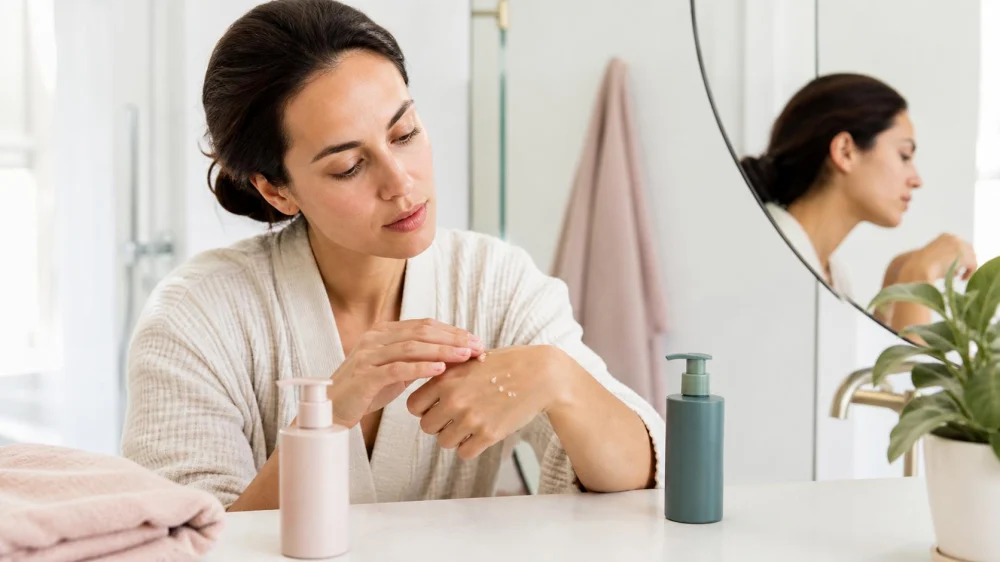
Skin care pilling is the formation of small rolls or flakes when products collect on the surface during layering or rubbing. Start by using less product, reducing the number of layers, allowing each layer to settle, and pressing rather than repeatedly rubbing. Test products one at a time. If sunscreen pills, do not scrub it away and assume protection remains; reapply according to the label.
This guide is for adults in the United States troubleshooting a cosmetic layering problem. Pilling does not by itself diagnose dry skin, allergy, or an ineffective formula. Stop and seek professional advice for persistent burning, swelling, rash, blistering, or eye symptoms.
What skin care pilling is
Pilling looks like tiny crumbs, strings, eraser-like rolls, or flakes that appear as products are spread. The material may be dried product film, makeup, skin flakes, lint, or a mixture.
It often appears when one layer forms a flexible film and the next layer or application motion lifts it. It can also occur when too much product remains wet on the surface or when several formulas do not spread smoothly together.
Pilling is mainly an application and compatibility clue. A formula can work well alone but pill in a particular sequence, amount, climate, or makeup routine.
Common causes
- Too much product: Excess material cannot spread into an even layer.
- Too many layers: Multiple serums, gels, creams, oils, sunscreen, and primer create competing films.
- Insufficient settling time: Applying the next product while the surface is very wet can shift the layer below.
- Repeated rubbing: Long massage or back-and-forth motion rolls up a drying film.
- Formula interaction: Thickeners, powders, silicones, polymers, oils, and pigments can behave differently in combination.
- Surface texture: Visible flakes, hair, or lint can become trapped and roll with product.
- Makeup tools: A dry sponge, dense brush, or heavy buffing can disturb skin care underneath.
A practical troubleshooting checklist
- Start with clean hands and tools. Remove lint and old product from applicators.
- Test each product alone. Use it as labeled on separate occasions to see whether it pills by itself.
- Simplify the routine. Try cleanser, one moisturizer if needed, and sunscreen in the morning.
- Reduce the amount carefully. Use the label-directed amount, especially for sunscreen and treatment products; remove optional layers before under-applying a required one.
- Use a thin, even application. Spread with fewer passes and light pressure.
- Allow layers to settle. Wait until the surface is no longer very wet or mobile before adding the next product.
- Change one variable. Adjust only sequence, amount, wait time, or one product so the result is interpretable.
- Record the combination. Note product names, order, amount, weather, and whether makeup was added.
Protect sunscreen performance
Sunscreen needs an even, label-directed application. If it pills after optional serums or oils, simplify the layers underneath rather than using too little sunscreen. Let moisturizer settle and apply sunscreen with gentle, even strokes.
If visible sunscreen rolls off, coverage may be uneven. Do not brush away the crumbs and assume the original film remains intact. Follow the product’s reapplication directions, and consider switching the underlying moisturizer or sunscreen format if the problem continues.
Makeup labeled with sun protection is not automatically a replacement for a dedicated sunscreen applied in the required amount. Use current public-health and product guidance for your exposure and skin needs.
When pilling appears under makeup
First determine whether the pilling begins before makeup. If skin care is smooth alone, add primer or base makeup one item at a time. Use a clean tool and apply with pressing or light spreading rather than aggressive buffing.
A primer and foundation may have different film-forming systems. Matching marketing categories such as “water-based” or “silicone-based” does not guarantee compatibility because complete formulas matter.
Allow sunscreen to set before makeup, but do not wait so long that you forget adequate application or reapplication. If makeup repeatedly disrupts sunscreen, choose a simpler combination and ask a dermatologist or qualified skin professional for individualized options.
Pilling versus irritation
Pilling is material rolling on the surface. Irritation can include burning, stinging, persistent redness, itching, swelling, tenderness, cracking, or rash. The two can occur together, especially when rubbing is excessive or a product is not tolerated.
Stop the new or suspected product and rinse as appropriate when symptoms are significant. Seek urgent help for trouble breathing, facial or throat swelling, severe eye symptoms, blistering, or a rapidly spreading reaction. Contact a healthcare professional for persistent or recurrent symptoms.
Do not exfoliate aggressively to remove pills. Scrubs, acids, retinoids, brushes, or peeling products can worsen irritation and are not a universal fix for layering.
Build a simpler test routine
For several days, use only necessary, previously tolerated products as appropriate. Add one optional product back at a time and keep the application method consistent. This helps identify whether the cause is one formula, a combination, or excessive layering.
Check packaging instructions for order and frequency. Some treatment products are meant for a particular time of day or dry-skin application. Do not change prescription skin treatment without the prescriber’s advice.
Replace products that have changed smell, texture, color, or separation beyond the manufacturer’s description, or that are expired or contaminated. Storage damage can alter how a formula spreads.
Limitations and important notes
- Pilling does not prove two ingredients are chemically unsafe together.
- Using less sunscreen than directed is not an acceptable pilling solution.
- Dry flakes can contribute, but aggressive exfoliation may damage the skin barrier.
- Formula categories on social media oversimplify complete ingredient systems.
- Prescription and post-procedure routines require clinician-specific guidance.
Sources and evidence notes
This article reflects general cosmetic-formulation and application practice: reduce unnecessary layers, use label-directed amounts, allow films to settle, minimize friction, and change one variable at a time.
Use current product labels and guidance from a dermatologist or qualified skin professional for individual treatment, allergy, or persistent irritation. No product combination or sunscreen protection is guaranteed here.
Frequently asked questions
Does pilling mean a product is expired?
Not necessarily. Layering and application can cause it. Check storage, expiry guidance, and changes in smell, color, or texture.
Should serum go before moisturizer?
Often products are layered from lighter to heavier, but follow each label. The best order is the simplest compatible sequence that meets your needs.
How long should I wait between layers?
There is no universal time. Wait until the prior layer is no longer very wet or moving, and follow product instructions.
Can I rub pilling off and continue?
Rubbing may remove more product and irritate skin. If sunscreen is involved, coverage may be uneven and should be restored according to the label.
Will exfoliating stop pilling?
Not reliably. Pilling often comes from product amount, layers, and motion. Aggressive exfoliation can worsen dryness and irritation.
Conclusion and next steps
When products pill, simplify first. Test each item alone, use label-directed amounts, reduce optional layers, let each layer settle, and apply with fewer strokes. Protect sunscreen coverage and distinguish surface crumbs from irritation. If symptoms persist or a prescribed routine is involved, ask an appropriate professional.



 Vicky's Spa & Skincare LLC5.0 (13 reviews)
 Rachel Davis Aesthetics5.0 (25 reviews)
 New Image Skin Care1.0 (2 reviews)
 ferebee0.0 (0 reviews)
 Brooklyn Esthetics5.0 (41 reviews)
 Esthetics by Maria at OMY5.0 (8 reviews)
 How To Brighten Your Puffy Eyes With These 10 Tips
 How to Incorporate Antioxidants into Your Skin Care for Maximum Protection
 How To Use Face Masks To Improve Whiteheads Effectively
 Best Products for Dull Skin: What You Need to Know
 Effective Methods on How to Treat Dehydrated Skin and Restore Moisture
 Why You Should Add Zinc to Your Skin Care Routine: Benefits & Tips