
Patch-Test a New Skin Care Product: Steps and Limits
On this page
Quick answer
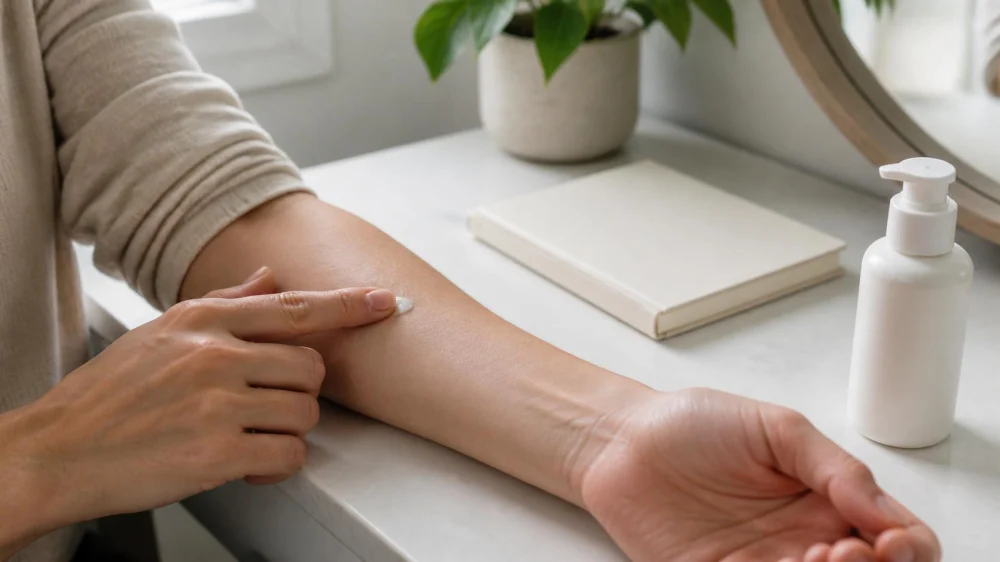
An at-home spot test means using a small amount of one new product on a limited area exactly as its directions allow before broader use. It may reveal irritation or delayed reaction, but it cannot guarantee safety or diagnose allergy. Test intact skin, keep other variables stable, stop for symptoms, and seek medical help for severe or spreading reactions.
What an at-home spot test can show
A cautious spot test is a personal tolerance check, not the standardized patch testing performed by dermatology or allergy professionals. It can show that a product causes redness, burning, itching, swelling, bumps, or dryness on one area under one pattern of use. It cannot reproduce every face, eyelid, lip, sun, sweat, friction, or repeated-exposure condition.
This guide is for adults in the United States introducing an ordinary over-the-counter skin care product. It is not appropriate for known severe allergy, active rash, broken skin, prescription treatment, medical adhesives, hair dye, lash or brow chemicals, or products whose label specifies a different safety test; follow professional and manufacturer guidance instead.
Practical checklist
- The complete product label, ingredient list, directions, warnings, expiration or period-after-opening information, and purchase source.
- A single product to test; avoid starting several new cleansers, treatments, makeup products, or fragrances at once.
- An intact, calm, clean area permitted by the product directions and away from eyes, lips, mucous membranes, wounds, eczema flare, or recently shaved skin.
- The amount and contact time the label allows, including whether the product is rinse-off or leave-on.
- Baseline photos and notes about existing color, texture, itch, dryness, and other products used on the area.
- Current skin conditions, allergies, medicines, pregnancy, recent procedures, and clinician instructions that may change what is appropriate.
- A plan to stop, rinse when directed, and obtain urgent help if symptoms become severe or extend beyond the test area.
Step-by-step plan
- Read the label first. Do not create an occlusive test, extend contact time, or use the product on a body area that the manufacturer excludes.
- Choose one small area of intact skin allowed by the directions. Wash gently, dry, and avoid applying fragrance, exfoliant, retinoid, acid, or another active to that spot.
- Apply the smallest normal-use amount with clean hands or an approved applicator. Do not cover it with tape or a bandage unless the product instructions specifically require that method.
- Observe at the label's contact time and later for a delayed change. Do not repeatedly rub, scratch, photograph with harsh flash, or reapply simply to provoke a clearer result.
- Record time, amount, location, sensation, visible change, washing, sun or sweat exposure, and resolution. Stop rather than escalating frequency when irritation appears.
- If no reaction occurs, introduce the product to the intended area gradually and as directed, while keeping the rest of the routine stable enough to identify a problem.
- Contact a dermatologist or other qualified clinician when reactions recur, the cause is unclear, sensitive sites are involved, or professional diagnostic patch testing may be needed.
Keep the product name, ingredient photo, batch or lot when available, open date, test site, amount, times, symptoms, and recovery together. Photograph in similar natural light without editing. A negative spot test does not erase the record; later reaction after repeated or wider use still matters.
Limits and important notes
Irritant and allergic reactions can look similar, and some appear only after repeated exposure or sun. Facial, eyelid, lip, neck, and body skin differ in sensitivity. Applying a product under a bandage can increase penetration and create a harsher exposure than normal use. Do not use home testing to challenge a known allergen or retry a product that caused a serious reaction.
Call emergency services for breathing or swallowing difficulty, throat tightness, faintness, confusion, or rapidly spreading swelling or hives. Seek prompt medical guidance for eye involvement, blistering, severe pain, widespread rash, facial swelling, infection signs, or symptoms that continue after stopping. Rinse chemical exposure as directed and contact poison or emergency resources when appropriate.
Frequently asked questions
Does a clear spot test mean the product is safe for my face?
No. It lowers uncertainty only for that area and exposure. Facial skin, repeated use, sun, sweat, and product combinations can produce a different response.
How many days should I test the product?
Follow the product's instructions and qualified professional advice. There is no universal schedule for every formula or skin condition.
Should I cover the spot with a bandage?
Not unless the instructions specifically require it. Covering can increase exposure, trap moisture, and cause adhesive irritation.
Can I test several products on different spots?
One change at a time is easier to interpret and reduces the chance of a larger combined reaction.
What is professional patch testing?
It is a clinician-directed diagnostic process using standardized allergens and readings. An at-home product spot test is not an equivalent substitute.
Sources and evidence
Use the product's current label and manufacturer directions, clinician instructions, and professional dermatology or allergy guidance. General skin-care practice supports one new product at a time, limited normal-use exposure, symptom tracking, and stopping for reactions; diagnosis requires qualified clinical assessment.
Conclusion and next steps
Make the test smaller than the decision: one product, one intact area, normal directions, and a written stop rule. If the skin stays calm, broaden use gradually while watching the intended area. If symptoms appear, stop, preserve the product information, and seek care based on severity rather than trying stronger or repeated home challenges.


 Marila Aesthetics & Wellness | Botox and Dermal Fillers4.0 (10 reviews)
 Desert Glow Aesthetics4.0 (41 reviews)
 Sharon's Beauty Loft0.0 (0 reviews)
 PJ Esthetics K-Beauty5.0 (1 reviews)
 About Image Med Spa5.0 (10 reviews)
 Crescent Skin Line5.0 (4 reviews)
 How to Choose the Best Skincare Routine for Your Skin Type
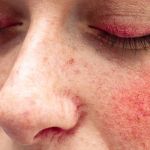 How To Heal Redness Effectively
 How to Repair Scars in People Over 40: Expert Skincare Insights
 The Best Skin Care Routine for Youthful and Radiant Skin
 How To Use Face Masks To Improve Whiteheads Effectively
 How to Care for Your Skin After Swimming in a Pool