
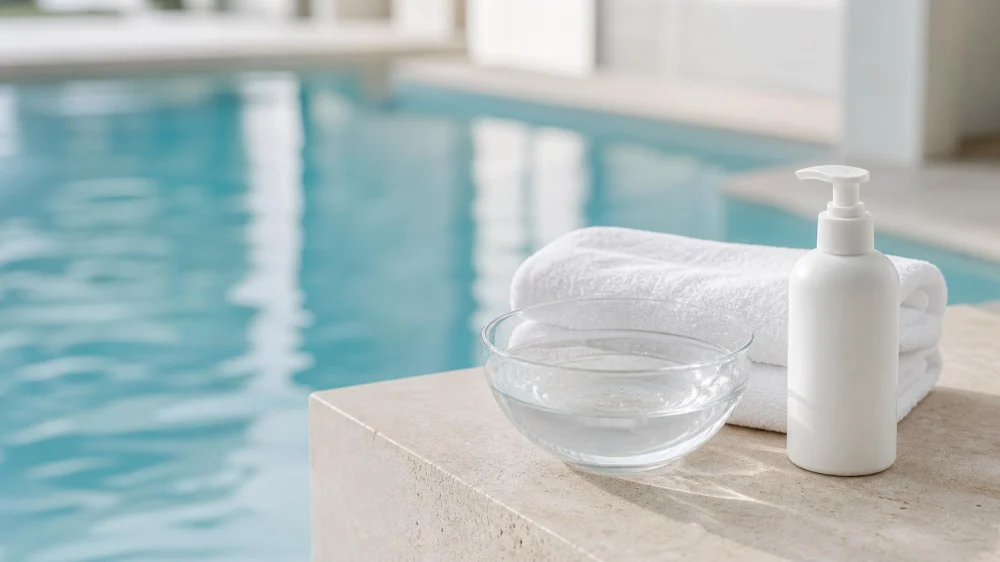
How to Care for Your Skin After Swimming in a Pool
On this page
Quick answer
After swimming, rinse with fresh lukewarm water, gently cleanse areas that still feel coated, pat rather than rub the skin dry, and apply a fragrance-free moisturizer while skin is slightly damp. Change out of wet swimwear promptly. If irritation persists, worsens, blisters, or affects breathing or the eyes, stop experimenting with products and seek appropriate medical care.
Why skin may feel different after a pool
Post-swim skin dryness is the tight, rough, or itchy feeling that can occur when pool water, repeated wetting, friction, and cleansing disrupt the skin’s surface barrier. Chlorinated water does not affect everyone the same way. Swim duration, water chemistry, skin condition, swimwear friction, and the products used afterward can all matter.
This guide is for generally healthy adults and families using maintained pools in the United States. It is not a diagnosis or a substitute for a clinician’s advice for eczema, psoriasis, open wounds, allergies, or a known chemical exposure.
After-swim skin care steps
- Leave wet clothing behind. Change out of a wet swimsuit as soon as practical. Prolonged dampness and friction can aggravate folds and areas under straps.
- Rinse promptly. Use fresh, lukewarm water. Very hot water may add to dryness, while a quick rinse helps remove pool water from skin and hair.
- Cleanse only as needed. A mild, fragrance-free cleanser is useful for sweaty, oily, or coated areas. A forceful scrub or a second harsh body wash is not necessary.
- Pat dry. Use a clean towel and press gently. Avoid vigorous rubbing, especially where the skin already feels tender.
- Moisturize while slightly damp. Apply a simple fragrance-free lotion or cream within a few minutes. Creams are often better for dry skin; lighter lotions may feel more comfortable in humid weather.
- Use clean, dry clothing. Choose loose garments if straps, waistbands, or seams have left red friction marks.
Best for: mild tightness or dryness that improves after rinsing and moisturizing. Not ideal for: a spreading rash, severe burning, hives, broken skin, or symptoms that return after every swim.
What to avoid
- Do not use abrasive scrubs, stiff brushes, or strong exfoliating acids on irritated skin.
- Do not layer several new “repair” products at once; doing so makes the source of a reaction harder to identify.
- Do not use fragrance to cover a pool smell on the skin.
- Do not assume a stronger chlorine odor proves a specific chemical concentration. Pool chemistry requires proper testing by pool staff.
- Do not share towels, razors, or personal skin products.
For the next swim, consider applying a familiar moisturizer before leaving home if your clinician or the product instructions support that use. Shower before entering when the facility requests it, and follow posted pool hygiene rules. Sunscreen is still necessary for outdoor pools; use a water-resistant product as directed and reapply according to its label.
When to get professional help
Stop swimming and get urgent help for trouble breathing, facial swelling, faintness, widespread hives, severe eye pain, or significant chemical exposure. Contact a healthcare professional for a rash that spreads, blisters, drains, becomes increasingly painful, shows signs of infection, or does not improve with simple care. People with eczema or another diagnosed skin condition should follow their established care plan and ask their clinician about recurring flares.
If several swimmers develop symptoms, notify the pool operator. A maintained facility should be able to explain how water quality concerns are assessed; individual swimmers should not try to correct public-pool chemistry themselves.
Sources and evidence notes
The steps above reflect broad dermatology skin-barrier guidance, common pool hygiene practice, and manufacturer directions for cleansers, moisturizers, and sunscreen. Product labels and a person’s medical care plan take priority. No single routine prevents every reaction, and this article does not claim that chlorine is the cause of every post-swim rash.
Frequently asked questions
Should I shower immediately after swimming?
A prompt fresh-water rinse is practical. If a full shower is not available, rinse exposed skin when possible, change into dry clothing, and shower once you reach home.
Do I need soap over my whole body?
Not necessarily. Use a mild cleanser where sweat, sunscreen, or residue remains, and let fresh water do the rest if your skin is easily dried out.
Is body oil enough after a swim?
Oil can reduce water loss but may not supply the same mix of water-binding and barrier-supporting ingredients as a moisturizer. Use a familiar product that your skin tolerates, and avoid slippery products around the pool deck.
Why am I itchy only under my swimsuit?
Wet fabric, trapped products, heat, and friction can contribute. Change promptly and wash the suit according to its care label. Recurring or severe irritation deserves professional assessment.
Can children follow the same routine?
The basic rinse, gentle drying, and simple moisturizer steps may apply, but use age-appropriate products and follow pediatric or clinician guidance for rashes, eczema, or chemical exposure.
Conclusion and next steps
Keep post-pool care simple: rinse, cleanse gently where needed, pat dry, moisturize, and put on dry clothing. Record the pool, swim duration, products used, and where symptoms appeared if irritation repeats. That short history can help a dermatologist or other qualified professional evaluate the pattern without guesswork.



 The Aesthetic Edge5.0 (7 reviews)
 Elements of Esthetics5.0 (2 reviews)
 Aesthetic Artistry4.0 (276 reviews)
 MY Microcurrent0.0 (0 reviews)
 Closed5.0 (4 reviews)
 RISEN…Bring Your Skin Back to Life!0.0 (0 reviews)
 How to Treat Acne Marks with Natural Skin Care Remedies
 Skin Care Tips For Acne In People With Dry Skin
 How To Treat Dry Skin In Teens With Effective Daily Care
 How to Combat Skin Aging with Antioxidant-Rich Skincare Products
 The Best Products for Treating and Preventing Skin Damage from the Sun
 How To Balance Hyperpigmentation for Athletes According to Experts