
How to Store Skincare Products and Know When to Replace Them
On this page
- Quick answer
- First identify cosmetic or drug
- Read dates and package symbols
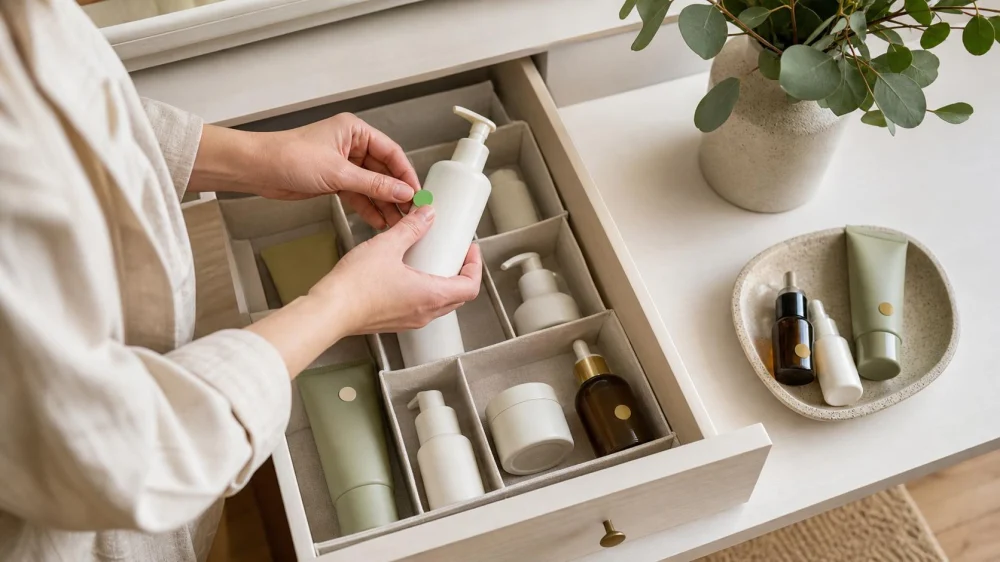
- Create a safer storage setup
- Reduce contamination during use
- Signs a product should be replaced
- Category-specific checks
- Skincare inventory checklist
- Limitations and important notes
- Frequently asked questions
- Sources and evidence notes
- Next steps
Quick answer
Keep skincare tightly closed in a cool, dry place away from direct sun and heat. Preserve the original label, note the opening date, use clean hands or applicators, and never add water or saliva to restore a drying product. Follow printed expiration and storage directions for sunscreens, acne treatments, and other drug products; replace any item that changes unexpectedly or may be contaminated.
First identify cosmetic or drug
Cosmetic shelf life is the period a product can be expected to remain safe and perform as intended under suitable storage and use. In the United States, an ordinary moisturizer or cleanser may be regulated as a cosmetic, while sunscreen and many acne treatments are over-the-counter drugs. Some products are both cosmetics and drugs.
This distinction matters because U.S. cosmetics are not generally required to carry expiration dates, while drugs must meet stability and labeling requirements. Look for a Drug Facts panel: its presence signals that drug directions, warnings, storage information, and expiration requirements apply.
Read dates and package symbols
- Expiration date: Do not use an OTC drug beyond its printed expiration. For cosmetics, follow any date supplied by the manufacturer.
- Period-after-opening symbol: An open-jar symbol with a number may state a manufacturer's recommended period after opening. It does not override signs of contamination or poor storage.
- Lot or batch code: Useful when checking recalls or asking the manufacturer about production and shelf life; it is not always a consumer-readable date.
- Opening date: Write the date on a removable label or maintain a simple inventory so you do not rely on memory.
Create a safer storage setup
- Choose a cool, dry cabinet or drawer away from direct sunlight, heaters, and repeated temperature swings.
- Avoid leaving products in a hot car. Heat can damage formulas and reduce preservative performance.
- Keep containers away from shower spray, standing water, and persistently humid bathroom zones when the label permits other storage.
- Close every cap or pump after use and keep inner lids, droppers, and seals in their intended position.
- Store upright when leakage could expose the product to air or contaminate other items.
- Keep products out of reach of children and pets, especially active treatments and essential-oil products.
Reduce contamination during use
- Wash and dry hands before applying a leave-on product or touching a jar.
- Use a clean spatula when supplied, and wash or replace it as directed.
- Do not touch a dropper tip to skin, fingers, or another surface; return it without wiping on an unclean towel.
- Do not share products that contact lips, eyes, broken skin, or reusable applicators.
- Never add water, saliva, oil, or another product to change texture unless the manufacturer specifically directs mixing at use.
- Do not return excess product from your hand to the container.
Signs a product should be replaced
Discard or ask the manufacturer about a product when you notice an unexpected change in odor, color, texture, separation, thickness, drying, leakage, package swelling, mold, or irritation. Also replace it after confirmed contamination, an applicable recall, or storage outside labeled conditions when safety cannot be verified.
Some formulas normally separate and instruct users to shake them. Compare current behavior with the label and the product's original condition rather than treating every separation as proof of spoilage. Conversely, a normal appearance cannot guarantee that a contaminated product is safe.
Category-specific checks
- Sunscreen: Follow the expiration and heat-protection directions. FDA advises not using expired sunscreen; a U.S. product without an expiration date should not be used if it was not purchased within the last three years.
- Acne and medicated products: Treat them as drugs when they carry Drug Facts. Follow labeled expiration, storage, dose, and warnings.
- Jar moisturizers: Minimize finger contact and moisture entry. A pump or tube may reduce repeated direct contact but still needs a clean nozzle and secure closure.
- Vitamin or antioxidant formulas: Light, oxygen, and heat may affect some ingredients. Follow opaque-container and refrigeration directions rather than inventing a storage method.
- Eye-area products: Because contamination can cause serious infection, follow short replacement guidance carefully and discard products used around an eye infection.
- Preservative-free or unusual formulas: Do not assume “natural” means longer lasting or safer. Follow the maker's tested storage and use period.
Skincare inventory checklist
- Product name, active ingredients, and original label are readable.
- Drug Facts products are within expiration and stored as directed.
- Opening or purchase date is recorded when useful.
- Caps, pumps, droppers, and spatulas are clean and functional.
- No unexpected odor, color, separation, texture, leakage, or irritation is present.
- Products are protected from heat, sunlight, moisture, children, and pets.
- Recalled, unidentified, shared, contaminated, or questionable items are isolated and not used.
- Manufacturer contact information is available for unclear codes or storage excursions.
Limitations and important notes
There is no safe universal replacement schedule for every cleanser, serum, or moisturizer. Formulation, packaging, preservative system, opening, environment, and handling differ. Manufacturer directions and U.S. drug labels take priority over social-media charts.
Stop use and seek medical care for serious swelling, blistering, breathing difficulty, eye injury, or another severe reaction. Persistent rash, burning, or worsening acne should be evaluated rather than repeatedly testing an old or questionable product.
Frequently asked questions
Do all skincare products have expiration dates?
No. Ordinary U.S. cosmetics are not generally required to show one, but over-the-counter drugs such as sunscreens and many acne treatments follow drug requirements.
Is bathroom storage safe?
A dry closed cabinet may work for some products, but heat, steam, and moisture can accelerate deterioration or contamination. Follow the label and choose a more stable location when practical.
Can I refrigerate skincare to make it last longer?
Only when the manufacturer recommends or permits it. Refrigeration can alter some emulsions, and food storage creates its own contamination risks.
Can I keep a product if it looks normal after expiration?
Do not use an expired drug product. For cosmetics, visible appearance alone cannot establish safety; follow manufacturer information and discard when age, storage, or contamination is uncertain.
Should I add water to a thick cleanser or cream?
No. Adding water can introduce microorganisms and change the preservation system and concentration. Replace the product or ask the manufacturer.
Sources and evidence notes
The FDA's cosmetic shelf-life guidance explains how heat, moisture, air, repeated handling, preservative breakdown, and contamination affect products and distinguishes cosmetics from drugs. FDA's sunscreen consumer guidance covers expiration and protection from excessive heat and direct sun.
Next steps
Review your skincare shelf one product at a time. Separate Drug Facts items, record opening dates, discard anything expired or contaminated, and move the remainder to a stable dry cabinet. Photograph labels and lot codes for products you use regularly so recall and manufacturer checks are easier.



 Joanna Moreno Skincare0.0 (0 reviews)
 LUX WELLNESS & SKIN THERAPY - Salmon Creek, Vancouver4.0 (135 reviews)
 Eastside Esthetics5.0 (2 reviews)
 Brilliance Dermatology - Calabasas4.0 (360 reviews)
 Sarah's European Skin Care4.0 (9 reviews)
 Infinity Rejuvenation Bar0.0 (0 reviews)
 How to Improve Skin Elasticity with the Right Skincare Routine
 How To Soothe Redness For People Living In Humid Climates
 How to Manage Blackheads: Expert Tips for Clearer Skin
 Natural Remedies for Eczema in Athletes | SkinCare Experts
 How to Treat and Prevent Skin Discoloration from Acne Scarring
 The Truth About Skin Care Myths: What’s Real and What’s Fake?