
Understanding Dry, Cracked Skin on Your Hands and Feet
Dry, cracked skin on your hands and feet is a common problem, especially during colder months or in dry climates. While it might seem like a minor issue, untreated cracked skin can lead to discomfort, infections, and long-term damage. In this article, we will explore the causes of dry, cracked skin on your hands and feet and provide practical tips for treating and preventing it.
Common Causes of Dry, Cracked Skin
Understanding the causes of dry, cracked skin is the first step in addressing the issue. Here are some of the most common reasons why your hands and feet may suffer from dryness and cracking:
- Weather Conditions – Cold, dry air is a major contributor to skin dryness. During the winter months, the lack of humidity in the air can strip your skin of its natural moisture, leading to cracks and rough patches.
- Hot Showers or Baths – Prolonged exposure to hot water can remove the oils from your skin, causing it to become dry and irritated. While hot water might feel soothing, it can worsen dryness in the long run.
- Harsh Skin Care Products – Some soaps and cleansers can be too harsh on the skin, stripping it of essential oils. Opting for fragrance-free, moisturizing products can help prevent further skin damage.
- Dehydration – If you’re not drinking enough water, your skin may become dehydrated, leading to dryness and cracking, particularly on your hands and feet.
- Health Conditions – Certain conditions, like eczema, psoriasis, or diabetes, can lead to dry, cracked skin. If your skin doesn’t improve with basic care, it may be a sign of an underlying condition.
Effective Solutions for Dry, Cracked Skin
Now that we’ve identified some of the causes of dry, cracked skin, let’s look at some practical ways to treat and prevent it:
- Moisturize Regularly – The key to healing dry, cracked skin is consistent moisturization. Use a thick, hydrating lotion or cream that contains ingredients like shea butter, cocoa butter, or glycerin. Apply it right after washing your hands or feet, while your skin is still slightly damp, to lock in moisture.
- Exfoliate Gently – Exfoliating your hands and feet removes dead skin cells and helps the moisturizer penetrate more deeply. Use a gentle scrub or pumice stone to exfoliate once or twice a week, being careful not to irritate the skin further.
- Use Natural Oils – Natural oils, like coconut oil, olive oil, and almond oil, can provide deep hydration and nourishment for your skin. Apply a generous amount of oil to your hands and feet before bedtime, and cover them with socks or gloves for extra absorption overnight.
- Wear Protective Gloves – When doing chores that involve water or harsh chemicals, such as washing dishes or cleaning, wear rubber gloves to protect your hands from drying out. This helps prevent further damage to the skin.
- Hydrate from Within – Drinking plenty of water is essential for keeping your skin hydrated. Aim for at least eight glasses of water a day to maintain healthy, moisturized skin.
Home Remedies for Cracked Heels
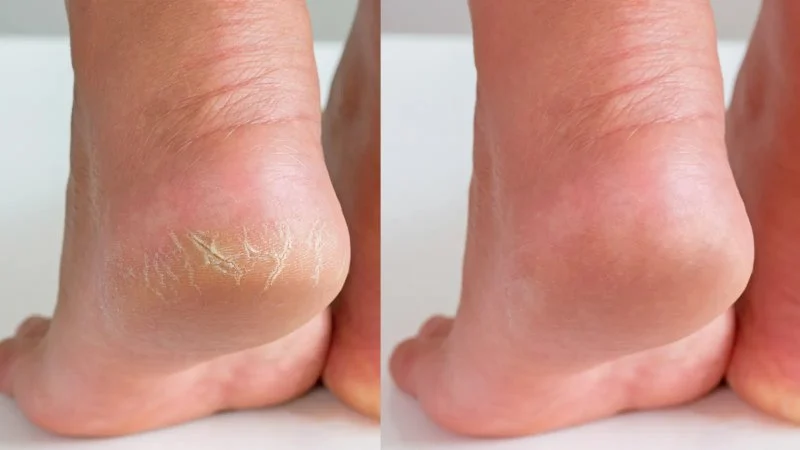
Cracked heels are a common problem, particularly for those with dry skin. To heal cracked heels, try these simple home remedies:
- Soak and Moisturize – Soak your feet in warm water with Epsom salts for about 15 minutes. After soaking, apply a thick moisturizer or petroleum jelly and cover your feet with socks overnight to help the skin heal.
- Use a Foot File – Gently use a foot file or pumice stone to remove dead skin from your heels. Be careful not to overdo it, as this can lead to irritation and further cracking.
- Avoid Walking Barefoot – Walking barefoot on hard surfaces can exacerbate heel cracks. Wear supportive shoes or slippers to protect your feet and provide cushioning.
When to See a Doctor
In most cases, dry, cracked skin on the hands and feet can be treated with at-home remedies. However, if you experience the following symptoms, it’s important to see a dermatologist or healthcare provider:
- Severe Cracking or Bleeding – If your skin is severely cracked or bleeding, this could be a sign of an underlying medical condition that requires professional treatment.
- Persistent Dryness – If your skin remains dry and cracked despite consistent moisturizing, it may indicate a more serious skin condition like eczema or psoriasis.
- Infection – If you notice redness, swelling, or pus around the cracks, it may be infected, requiring medical attention.
Real-Life Example: Treating Cracked Skin Effectively
Take the example of Rachel, who had struggled with cracked heels for years. Despite trying various creams and remedies, she couldn’t find relief. After visiting a dermatologist, Rachel was diagnosed with eczema, which was contributing to her dry skin. With a tailored skincare regimen that included prescription creams, regular exfoliation, and deep moisturizing, Rachel saw a dramatic improvement in her skin within weeks. This shows the importance of consulting a professional if at-home treatments aren’t effective.
How to Prevent Dry, Cracked Skin in the Future
To prevent dry, cracked skin from returning, follow these tips for long-term skin care:
- Moisturize Daily – Make moisturizing a daily habit, especially during the colder months when your skin is most prone to dryness.
- Limit Exposure to Harsh Chemicals – Use mild soaps and cleaning products, and wear gloves when handling harsh chemicals or cleaning agents.
- Stay Hydrated – Drink plenty of water throughout the day to keep your skin hydrated from the inside out.
If you’re looking for expert skin care products to help with dry, cracked skin, visit SkinCare Experts for trusted recommendations and solutions.





 Mashk Inc5.0 (13 reviews)
 Elizabeth Padgett-Mary Kay5.0 (9 reviews)
 Skin By Sophary5.0 (12 reviews)
 Natural Beauty Facial0.0 (0 reviews)
 Lavish Skin and Body Studio5.0 (1 reviews)
 Kiwi Spa Organic Facial Innovation5.0 (374 reviews)
 How To Prevent Dark Circles And How To Manage It – Expert Skincare Advice
 Best Practices For Your Age Spots With These 12 Tips
 How to Boost Your Sensitive Skin in Humid Climates – Tips & Solutions
 How To Reduce Dull Skin With A Simple Routine | Skincare Tips for Radiance
 How to Prevent and Treat Pet Constipation with Natural Remedies
 How to Nourish Face Masks for Scarred Skin: A Complete Healing Guide