
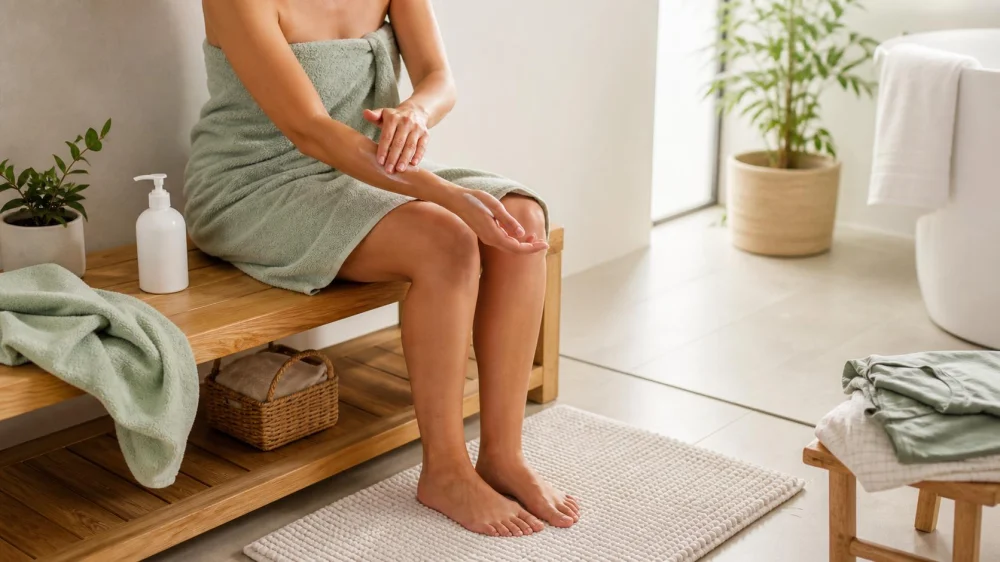
Body Moisturizer Routine: Apply, Dress, and Recheck
On this page
Quick answer
Apply body moisturizer to gently patted, slightly damp skin after bathing, using enough for an even comfortable layer without making floors, hands, or footwear slippery. Work in sections, follow the label, let the product settle before dressing, and wash product from palms when grip matters. Choose a texture that matches the dryness and body area, and stop if it causes persistent burning, rash, swelling, or worsening symptoms.
This guide is for adults in the United States building a general body-moisturizing routine. It is not a treatment plan for eczema, psoriasis, infection, wounds, severe dry skin, medication reactions, or another diagnosed condition. Follow a dermatologist's directions when you have a prescribed product or condition-specific plan.
What moisturizer does
A body moisturizer is a topical product designed to add water-compatible ingredients, smooth the outer skin surface, and/or reduce water loss. Lotions, gels, creams, and ointments differ in thickness, oil content, feel, packaging, and the way they spread.
Applying moisturizer while skin is still slightly damp can help retain water from bathing. That does not mean dripping-wet skin or an extremely thick layer is better. The useful amount is one that spreads evenly, feels comfortable, and can be used consistently without causing irritation or unsafe slipperiness.
Dryness can vary by area. Shins, elbows, knees, hands, and feet may need a different texture from the chest or back. Skin folds, acne-prone areas, recently shaved skin, and sites under medical devices or compression garments may require individualized advice.
Choose a texture for the situation
Use the product label and your clinician's guidance rather than assuming the thickest product is always right:
- Lotion: Usually spreads quickly over larger areas and may feel lighter. It can be convenient for routine use but may not feel sufficient for very dry skin.
- Cream: Thicker than many lotions and often useful when more occlusion is wanted without the full feel of an ointment.
- Ointment: Often the most occlusive and greasy. It may suit very dry areas when recommended, but it can transfer to fabric and make hands, feet, tubs, and floors slippery.
- Gel: May feel light or cooling, but formulation matters. Alcohol, fragrance, acids, or other ingredients may sting or irritate some skin.
For dry or sensitive skin, dermatology guidance commonly favors fragrance-free products. “Unscented” can mean a fragrance was masked rather than absent, so read the ingredient list and the exact label claim. Introduce only one new product at a time if you are prone to reactions.
A pump can reduce repeated finger contact with the product. A jar can still be used hygienically with clean, dry hands or a clean designated spatula. Do not add water, mix products in the original container, or transfer moisturizer to an unlabeled food container.
After-bathing application steps
- Set up before bathing. Put the labeled moisturizer, clean towel, nonslip bath mat, clothes, and any mobility support within safe reach.
- Use warm rather than very hot water. Keep the bath or shower reasonably brief if dryness is a concern and follow any clinician-specific instructions.
- Pat instead of rubbing. Use a clean towel and leave the skin slightly damp without leaving water pooled on the floor.
- Move to a stable surface. Sit when balance or reaching is difficult. Do not stand on a wet, product-coated foot.
- Apply in sections. Start with one arm or leg, spread a thin even layer, then continue. This prevents missing areas and reduces excess.
- Use gentle strokes. Do not aggressively scrub flaky, itchy, bruised, or fragile skin.
- Adjust by body area. Use less on areas that feel greasy or clog-prone and follow professional advice for folds, feet, or treated skin.
- Wash or wipe palms if needed. Preserve a secure grip before handling a cane, rail, child, pet leash, tools, cookware, or vehicle controls.
Do not apply moisturizer between the toes or under a dressing, brace, compression item, sensor, adhesive, or medical device unless the relevant clinician or device instructions permit it. Extra moisture or product can affect skin condition, fit, adhesion, and friction.
Dress, grip, and move safely
Allow the product to settle according to its label before putting on tight clothing. Soft, breathable fabric may feel more comfortable than rough material when skin is dry. If a garment becomes heavily coated, follow its care label and change it so residue does not repeatedly contact the skin.
Keep moisturizer off the soles of the feet unless a clinician-directed routine includes them and you can remain safely seated until footwear is secure. If treating dry heels, consider applying the product while seated, then use clean socks only when the product and care plan allow it. Never walk across smooth flooring with greasy feet.
Clean any drips from tile, tubs, shower floors, grab bars, counters, and bottle exteriors promptly. A routine that helps skin should not create a fall risk for you or another household member.
Keep the product and routine clean
- Wash and dry hands before dipping into a jar.
- Keep pump openings, lids, spatulas, and container rims clean.
- Close the container and store it within the labeled temperature range.
- Do not share a personal product when hands or applicators contact the container.
- Discard or ask the manufacturer about product that changes color, smell, texture, or separation unexpectedly.
- Keep packaging so the ingredient list, lot information, warnings, and contact details remain available.
- Store all skin-care products away from children and pets.
When using a travel container, label it accurately and clean and dry the container before filling. Avoid continuously topping up old product; mixing batches makes cleanliness and age harder to track.
Limitations and stop signs
Stop a new moisturizer and rinse or seek advice as directed if it causes persistent burning, stinging, hives, blistering, marked redness, swelling, or a spreading rash. Call emergency services for trouble breathing, throat or facial swelling, faintness, or another severe reaction.
Arrange dermatology or medical care when dryness is painful, cracked, bleeding, widespread, rapidly worsening, infected-looking, or not improving with a gentle routine. New generalized itching, swelling, color change, sores, or symptoms after starting a medicine also deserve professional evaluation.
Do not use cosmetic moisturizer as a substitute for a prescribed medicine, wound product, burn treatment, antifungal, or infection care. Avoid applying it to an open wound or fresh procedure site unless the treating clinician says it is appropriate.
Sources and evidence notes
The American Academy of Dermatology recommends short warm bathing, gentle patting, applying moisturizer while skin remains damp, and considering fragrance-free creams or ointments for dry skin. The FDA cosmetics safety guidance supports reading labels, clean hands, clean containers, and attention to product changes. This article adds a practical section-by-section and fall-prevention workflow.
Frequently asked questions
How quickly after a shower should I moisturize?
Apply it soon after gently patting the skin so some moisture remains, as long as you can do so safely. Prepare the product beforehand and sit if balance or reaching is difficult.
Is a cream always better than a lotion?
No. Creams and ointments may retain more moisture for dry skin, while a lotion may be easier to spread and use consistently. Body area, climate, skin condition, preferences, and clinician advice affect the choice.
Can I mix body oil into a moisturizer jar?
Do not alter the original container unless the manufacturer instructs it. Mixing can change texture, preservation, dosing, and compatibility. If layering products, ask a dermatologist and keep the containers separate.
Why does moisturizer sting?
Stinging can occur with irritated or cracked skin or from an ingredient that does not suit you. Stop if the sensation persists or is significant, check the label, and ask a dermatologist about ongoing symptoms rather than repeatedly testing the painful area.
Should I moisturize before putting on compression garments?
Follow the garment supplier and treating clinician. Product can affect grip, fabric, skin moisture, and fit, and some routines require a waiting period or a specific product.
Next steps
Place one clearly labeled moisturizer near a clean towel and nonslip mat, then test a simple section-by-section routine after your next bath. Pat skin slightly damp, apply an even layer, clean your palms and any floor drips, and wait before dressing. Recheck comfort later that day. If dryness remains painful, cracked, bleeding, widespread, or persistently itchy, arrange a dermatology evaluation.


 The Center For Holistic Skin Rejuvenation5.0 (9 reviews)
 Bay Skin Studio0.0 (0 reviews)
 Face by Adana5.0 (1 reviews)
 Peachy NoMad4.0 (528 reviews)
 Urban Oasis Skin Care5.0 (14 reviews)
 The Glo Alchemist5.0 (3 reviews)
 Best Skin Care Routine for Combination Skin: Expert Advice
 How To Reduce Dull Skin With A Simple Routine
 Natural Remedies For Oily Skin Using Natural Remedies That Truly Work
 How to Care for Your Skin When You’re Traveling: Tips for Busy Lifestyles
 How to Use Lactic Acid to Exfoliate and Hydrate Your Skin: A Complete Guide
 How To Prevent Scars With A Simple Routine