
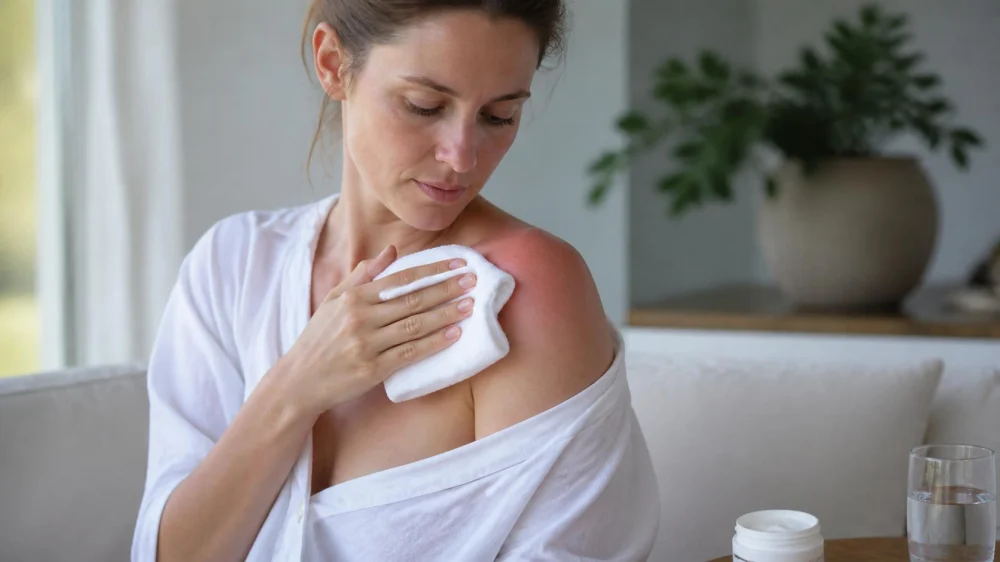
Sunburn First Steps: Cool, Cover, and Know the Limits
On this page
Quick answer
For a mild sunburn, leave the sun, cool the skin with a comfortable shower or damp cloth, moisturize gently, drink according to normal needs, and protect the area from more ultraviolet exposure. Do not apply ice directly, pop blisters, or rely on numbing products without guidance. Extensive blistering, severe pain, fever, confusion, dehydration, eye symptoms, or illness requires medical advice.
Why it matters
Sunburn is an inflammatory skin injury caused by excessive ultraviolet exposure. Redness and pain can evolve after leaving the sun, so early appearance may underestimate the final severity.
This U.S. guidance covers general first aid for mild sunburn. Children, people with extensive burns, photosensitizing medicines, immune problems, or heat illness may require earlier care. It does not replace individualized medical advice.
Practical checklist
- Move indoors or into reliable shade and prevent additional exposure.
- Cool the skin gently with cool—not painfully cold—water or compresses.
- Use a plain compatible moisturizer while skin is slightly damp if tolerated.
- Wear loose soft clothing and avoid friction, hot showers, and harsh exfoliation.
- Leave blisters intact and protect them from rubbing and contamination.
- Review medicines and products that may increase sun sensitivity with a pharmacist or clinician.
- Watch overall symptoms as well as the skin, especially after heat exposure.
Step-by-step plan
- End UV exposure immediately. Shade alone may still allow reflected light, so cover the area and move to a protected setting.
- Cool in short comfortable sessions. Avoid direct ice and extreme cold, which can further injure skin.
- Moisturize simply. Choose a product previously tolerated and stop if it stings or worsens irritation; avoid stacking fragrances and active ingredients.
- Manage discomfort safely. Ask a pharmacist or clinician about pain medicine based on age, pregnancy, conditions, allergies, and other medication.
- Protect healing skin. Use loose clothing and future sun protection; do not peel skin or break blisters intentionally.
- Monitor hydration and heat symptoms. Drinking excessive water is not treatment for severe heat illness; seek help for concerning systemic signs.
- Plan prevention after recovery. Review shade, timing, clothing, eyewear, broad-spectrum sunscreen use, reapplication, and missed areas for the next exposure.
Note exposure time, location, clothing, sunscreen and reapplication, medicines, body areas, blisters, pain, temperature, and other symptoms. Photos in consistent light can show progression for a clinician.
Limits and warning signs
Aloe, moisturizer, or pain relief may improve comfort but does not reverse DNA damage or make renewed sun exposure safe. A base tan is not reliable protection. Cloud, water, snow, altitude, and reflection can change exposure.
Seek prompt care for extensive blistering, severe swelling or pain, fever, vomiting, confusion, fainting, weakness, dehydration, eye pain or vision change, infection signs, or a burn affecting a very young child. Call emergency services for altered consciousness, seizure, severe breathing trouble, or heat-stroke concerns.
Frequently asked questions
Should I put ice on a sunburn?
No. Direct ice can damage already injured skin. Use comfortably cool water or a cool damp cloth.
Should I pop sunburn blisters?
No. The blister roof protects underlying skin. Keep it clean and protected and seek advice for large or extensive blisters.
Can I exfoliate peeling skin?
Avoid pulling or scrubbing. Let skin shed naturally and use gentle care while the barrier recovers.
When can I return to the sun?
Protect healing skin from additional UV exposure. Use clothing, shade, and sunscreen according to current professional guidance.
Sources and evidence
The article reflects broad burn and sun-safety principles: end exposure, cool gently, protect the barrier, avoid ice and blister disruption, monitor systemic symptoms, and prevent repeat ultraviolet injury.
Conclusion and next steps
Move out of UV exposure, cool the skin gently, and keep the routine plain. Check for blisters and whole-body symptoms over the next day. Once recovered, adjust clothing, shade, sunscreen coverage, and reapplication so the same missed area is protected.


 PURIGENEX0.0 (0 reviews)
 OC Esthetique and Spa5.0 (59 reviews)
 Yure skinn & Body Lounge5.0 (3 reviews)
 Clear Skin America5.0 (44 reviews)
 Acne Specialists of Walnut Creek5.0 (26 reviews)
 Kerri Skin Care4.0 (173 reviews)
 How To Avoid Uneven Skin Tone Effectively
 Top Tips for Fine Lines in Women: How to Manage and Reduce Them
 The Best Skincare Routine for Healing Dry, Cracked Skin: Expert Tips and Solutions
 Best Products for Hyperpigmentation Using Natural Remedies
 Common Mistakes in Eczema Using Natural Remedies You Should Avoid
 How To Embrace Large Pores: Expert Advice on Texture, Products, and Real Skin