
Skincare Product Recall Check: Match, Stop, and Report
Table of contents
Quick answer
If you hear about a skincare product recall, stop and compare the official notice with the product’s brand, exact name, size, lot or batch code, and dates. Follow the notice’s instructions for stopping use, return, correction, or disposal. Keep the package and purchase details until the match is resolved. If you develop an unexpected reaction, stop using the product, contact a healthcare professional, and report the problem to FDA.
What a recall means
The U.S. Food and Drug Administration explains that a recall is an action to correct or remove an FDA-regulated product that violates applicable laws or regulations. Recalls can result from contamination, an undeclared ingredient, manufacturing defects, adverse-event reports, or other problems. The response is specific to the notice: some products are returned or discarded, while others may receive corrected labeling or another remedy.
A social-media post, screenshot, or forwarded message is not enough to establish the scope. Use it as a prompt to find the official notice, then match identifying details carefully.
Identify the exact product
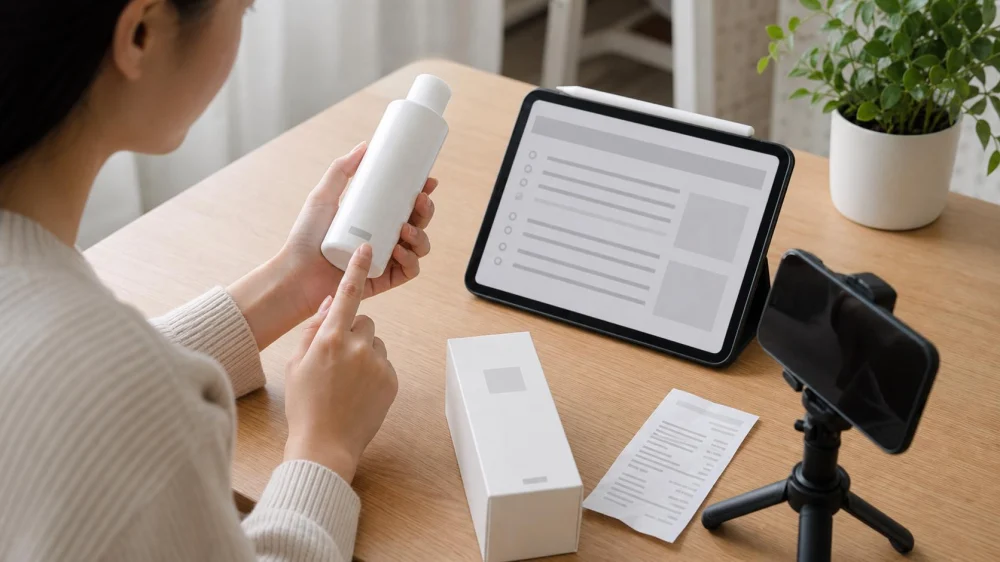
Place the container and outer package in good light. Without opening or using it again, record:
- Brand and full product name
- Product type, shade, scent, or variant
- Net quantity and package style
- Lot, batch, or code printed or stamped on the container
- Manufacturing, expiration, or best-by dates if present
- UPC or other product identifier
- Where and approximately when it was purchased
Photograph the front, back, code, ingredient panel, and receipt if available. Similar-looking products may not be part of the same recall, so do not rely on color or brand alone.
Verify the notice
- Search FDA’s Recalls, Market Withdrawals, and Safety Alerts database.
- Open the full notice and read the announcement date, affected identifiers, distribution, hazard, and consumer instructions.
- Check the recalling company’s official notice or contact listed by FDA when clarification is needed.
- Compare every available identifier rather than matching only the product name.
- Save or print the notice because instructions may be updated.
FDA posts many company announcements as a public service and does not endorse the named product or company. A product absent from a quick search is not automatically safe; spelling, dates, jurisdiction, or a newly developing notice can affect results.
What to do when it matches
- Stop using the affected product unless the official notice gives a different specific instruction.
- Keep it away from children, pets, and other household members.
- Do not transfer the contents into an unmarked container.
- Follow the stated return, refund, correction, or disposal procedure exactly.
- Contact the company using the verified details in the official notice, not a link from an unsolicited message.
- Clean an applicator or nearby surface only as appropriate for the identified hazard and product instructions.
Do not discard packaging before confirming whether the lot code or container is needed for a refund, investigation, or medical discussion. When disposal is directed, follow local waste requirements; do not pour a product into a drain unless authorized instructions say to do so.
If you had a reaction
FDA’s cosmetics safety guidance advises consumers to stop using a cosmetic and call a healthcare provider for an unexpected rash, redness, burn, or other reaction. Tell the clinician the product name, when and where it was used, symptom timing, other products used in the area, and any known allergies. Bring photos and packaging if safe and practical.
Do not test the recalled product again to prove it caused the problem. Avoid adding several new remedies before medical advice, because they may irritate the skin or make the cause harder to assess.
Document and report
FDA accepts cosmetic product complaints, including adverse reactions and product-quality concerns such as an unusual odor, color change, or foreign material. A useful report identifies the person affected, symptoms and dates, treatment or outcome, exact product and code, place of purchase, and manufacturer contact if known.
Report through FDA’s official cosmetic complaint channel linked below. You may also contact the manufacturer using verified information. Keep confirmation numbers and note whom you spoke with.
What not to do
- Do not keep using a matching product just because no reaction has occurred.
- Do not sell, donate, or give away recalled stock.
- Do not smell or sample a suspect product to test contamination.
- Do not follow disposal advice from an unverified social post.
- Do not assume every size, shade, or lot from the brand is affected.
- Do not replace medical evaluation with an online complaint.
Limitations and urgent signs
This guide cannot determine whether an item is recalled or diagnose a reaction. Notices change, and the official announcement controls. Call emergency services for trouble breathing, fainting, severe facial or throat swelling, confusion, or other life-threatening symptoms. Promptly seek clinical care for eye exposure, severe pain, blistering, spreading redness, fever, drainage, or worsening symptoms. Follow Poison Control or emergency responder instructions for possible poisoning or hazardous exposure.
Frequently asked questions
Does FDA approve every cosmetic before sale?
No. FDA states that cosmetics and most ingredients, other than color additives, generally are not approved before retail sale. Manufacturers remain responsible for product safety and compliance.
What if I threw away the box?
Check the container for a code and compare every detail you still have. Contact the verified company number in the notice if you cannot determine the match.
Can I return an opened recalled skincare product?
The remedy varies. Follow the exact recall notice and retailer instructions; do not assume standard return rules apply.
Should I report a bad odor if I had no rash?
FDA says consumers can report a product problem such as bad smell, color change, or foreign material even without a reaction.
Official sources
Use FDA’s Recalls, Market Withdrawals, and Safety Alerts, FDA 101: Product Recalls, and Using Cosmetics Safely. FDA’s cosmetic complaint page provides current reporting routes.
Next steps
Photograph the item and code, verify the full official notice, and follow its remedy. If there was a reaction, stop use, contact a healthcare professional, and submit a detailed report. Keep your evidence and confirmation until the matter is resolved.



 The Skin Collective5.0 (72 reviews)
 The Wax Shack and Skin Care Studio4.0 (12 reviews)
 Ageless Perfection5.0 (5 reviews)
 Lille Piece of Heaven - Beauty Spa4.0 (42 reviews)
 Abrenica Aesthetics4.0 (4 reviews)
 Technique Skincare5.0 (69 reviews)
 How to Manage Oily Skin: 15 Expert Tips for a Clearer Complexion
 The Best Skincare Products for Dealing with Acne and Oily Skin
 Top 15 Tips to Avoid Mistakes with Your Oily Skin Routine
 How to Avoid Inflamed Skin and How to Manage It Effectively
 The Best Skincare Tips for Preventing Dry Skin in Hot Weather
 Benefits Of Using Rosacea Treatment and How To Effectively Manage It