
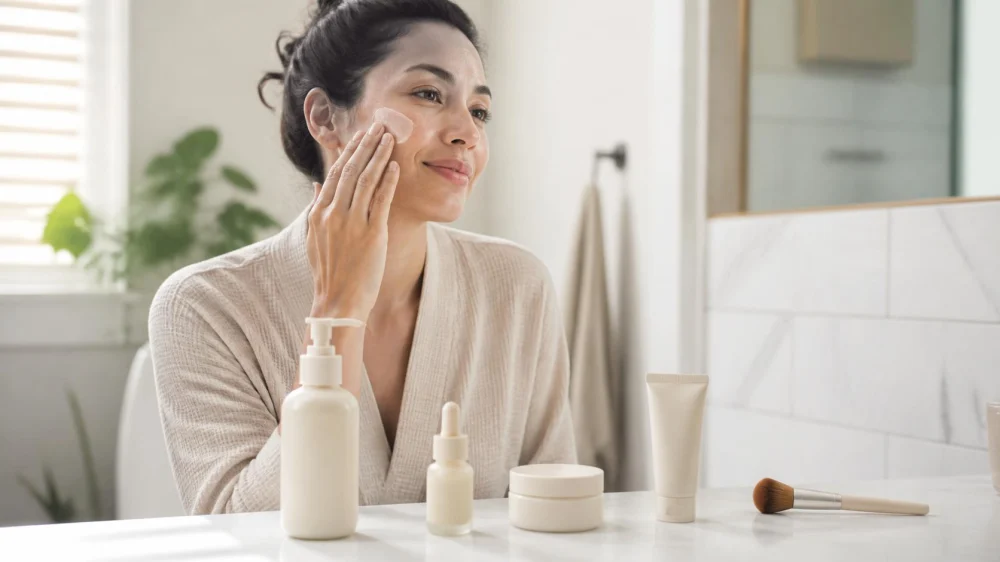
Skin Care Layering: Build a Simple Order You Can Follow
On this page
Quick answer
A simple routine is easier to evaluate than a crowded one. The American Academy of Dermatology recommends cleansing first, applying medicine or treatment next, then moisturizer and/or sunscreen, followed by makeup if desired. Follow each label and prescriber's directions because some products require dry skin, a specific amount, or different timing. Add one optional product at a time and stop if irritation develops.
Let treatment instructions set the order
Layering is not a contest to use the most products. Sequence can affect performance, but medicine directions, product labels, formulation, and individual skin needs matter more than a universal social-media routine. The American Academy of Dermatology warns that too many products, especially multiple anti-aging products, may irritate skin. A basic sequence also makes it easier to identify which step helps or causes trouble.
This guide is for adults organizing a routine for intact skin. It is not a prescription and does not tell you to change a clinician-directed treatment. Children, pregnancy, eczema, acne, rosacea, allergies, procedures, and broken or infected skin may require individualized advice.
Practical checklist
- List every cleanser, medicine, treatment, moisturizer, sunscreen, and makeup product you use.
- Read directions for amount, frequency, application area, dry-skin timing, and sun warnings.
- Confirm with the prescriber or pharmacist where a prescription fits in the routine.
- Use a gentle cleanser and pat rather than rub the skin dry.
- Apply medicine or treatment after cleansing unless its directions say otherwise.
- Use moisturizer and daytime sunscreen according to their labels, then makeup if desired.
- Introduce only one optional product at a time so reactions are easier to trace.
- Stop a new product and seek advice for persistent burning, swelling, blistering, or worsening rash.
Step-by-step plan
- Write a morning and evening list instead of trying to remember a different order each day.
- Remove duplicate-purpose products and keep prescribed items exactly as directed.
- Cleanse gently, then follow required wait or dry-skin instructions on treatment labels.
- Apply the treatment amount to the specified area; more is not automatically more effective.
- Add moisturizer when directed, then apply daytime sunscreen using its full label directions.
- Apply makeup last if desired, using clean hands and applicators.
- Track comfort and simplify the routine again if stinging, dryness, scaling, or redness increases.
Record product name, active ingredient if listed, purpose, morning or evening timing, amount, application area, start date, and prescriber instructions. Photograph labels or keep links to current directions, and note one change at a time rather than rewriting the whole routine after a reaction.
Limits and important notes
There is no single order that overrides prescription directions or every product formulation. Terms such as serum, essence, oil, and cream do not by themselves establish medical priority. Waiting between layers is not universally required; follow the label or clinician. Combining multiple active treatments can increase irritation even when each product is sold without a prescription.
Contact a dermatologist or prescribing clinician when a treatment is difficult to place, irritation persists, symptoms worsen, or the routine involves a diagnosed condition. Stop a suspected product and seek urgent care for breathing trouble, facial or throat swelling, faintness, or another severe reaction. Do not restart a prescription or discard it permanently without appropriate advice unless emergency instructions require stopping.
Frequently asked questions
Does the thinnest product always go first?
No. Texture is only a practical clue. Medication, label, and prescriber directions take priority over a thin-to-thick rule.
Where does sunscreen go?
AAD's basic order places moisturizer and/or sunscreen after medicine or treatment and before makeup. Follow the sunscreen label for amount, timing, and reapplication.
Should I use every active product morning and night?
Not automatically. Frequency depends on the individual label or prescription, and using several active products can increase irritation.
How can I find which product causes stinging?
Return to a simple routine, stop the suspected new item when appropriate, document timing and symptoms, and ask a dermatologist if the cause is unclear or the reaction persists.
Sources and evidence
The American Academy of Dermatology's Should I apply my skin care products in a certain order? recommends cleansing, medicine or treatment, moisturizer and/or sunscreen, then makeup, and cautions that too many products may irritate skin. FDA cosmetic-safety guidance supports reading labels and stopping products that cause unexpected reactions.
Conclusion and next steps
Write a short morning and evening sequence, put treatment directions first, and remove steps without a clear purpose. Introduce changes one at a time and track comfort for several uses. If a medicine conflicts with a product label or irritation continues, pause experimentation and ask the prescriber, pharmacist, or dermatologist.




 Claire Hammond Skin Care5.0 (15 reviews)
 Vanguard Skin Specialists4.0 (208 reviews)
 Luminescence Aesthetics5.0 (25 reviews)
 Feelings Skincare Studio0.0 (0 reviews)
 Boca Raton Skin & Laser Center3.0 (2 reviews)
 ABS medical aesthetic4.0 (15 reviews)
 The Importance of Double Cleansing and How to Do It Correctly
 Everything You Need To Know About Eye Creams To Improve Dry Skin
 How To Brighten Physical Exfoliants for Hyperpigmentation Skin
 Best Skin Care Routine For Scars For Sensitive Skin: Effective Healing Tips
 How to Protect Your Skin from Harsh Winter Weather
 How to Get Rid of Excess Oil with Mattifying Skin Care Products