
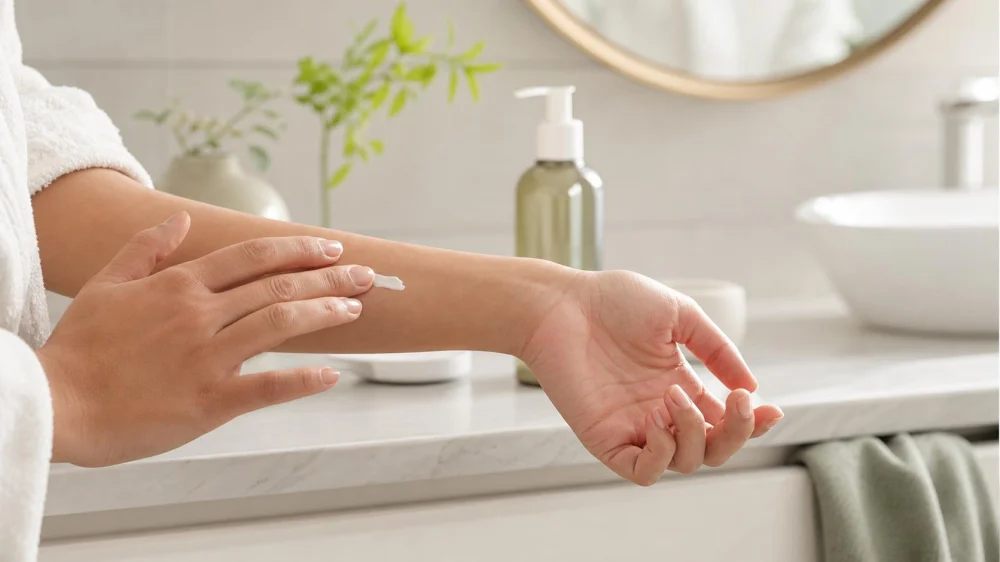
How to Patch Test a New Skincare Product
On this page
Quick answer
To patch test a new skincare product, apply a small amount to a discreet area such as the inner forearm or behind the ear, then watch for redness, itching, burning, swelling, or bumps over the next day or two. Stop using the product if irritation appears and seek professional care for severe or persistent reactions.
What patch testing means
A skincare patch test is a cautious way to try a small amount of a new product on a limited skin area before applying it widely to the face or body.
It cannot guarantee that a product will never irritate your skin, but it can help you notice obvious sensitivity before a full-face application.
How to do a simple at-home test
- Choose a small area. Use the inner forearm, side of the neck, or behind the ear. Avoid broken, sunburned, or already irritated skin.
- Apply a tiny amount. Use only enough product to cover a small spot.
- Leave it alone. Do not layer several new products on the same area.
- Watch the skin. Check for stinging, itching, redness, swelling, bumps, or unusual dryness.
- Introduce slowly. If no reaction appears, start with limited use instead of adding the product to every routine immediately.
What to watch for
Mild tingling can happen with some products, but strong burning, swelling, hives, blistering, or worsening redness is a sign to stop. Wash the area gently with water if the product feels uncomfortable.
If symptoms are severe, spread quickly, involve the eyes or lips, or do not improve, contact a dermatologist or other qualified healthcare professional.
Best for and not ideal for
At-home patch testing is best for introducing moisturizers, cleansers, sunscreens, serums, and other over-the-counter skincare products cautiously. It is not ideal for diagnosing allergies, testing prescription products without instructions, or managing active rashes.
People with a history of severe reactions, eczema flares, allergies, or medically treated skin conditions should ask a dermatologist how to introduce new products safely.
Patch test checklist
- Test only one new product at a time.
- Use a small, discreet area of intact skin.
- Write down the product name and application time.
- Do not cover the area tightly unless product instructions say so.
- Stop if burning, swelling, hives, or intense itching appears.
- Introduce the product gradually if the test area stays calm.
Important notes
This article is general skincare education for readers in the United States. It does not diagnose allergies, treat rashes, or replace advice from a dermatologist.
Patch testing at home is different from medical allergy patch testing performed by healthcare professionals. If reactions are repeated, severe, or confusing, professional evaluation is the safer next step.
FAQ
How long should I wait after a patch test?
Many people watch the area for at least 24 to 48 hours. Some delayed reactions can take longer, especially for sensitive skin, so introduce the product slowly even after a calm first test.
Where is the best place to patch test skincare?
The inner forearm, behind the ear, or side of the neck are common discreet areas. Choose intact skin and avoid areas that are already irritated.
Can I patch test multiple products at once?
It is better to test one product at a time. If irritation happens, testing several products together makes it hard to know which one caused the problem.
What should I do if the patch test burns?
Stop using the product and gently rinse the area. Seek professional care if symptoms are severe, spreading, or persistent.
Evidence notes
This guide follows common dermatology-style product introduction principles: test one new item at a time, observe for irritation, and seek professional help for significant or persistent reactions. Product labels and dermatologist instructions should take priority.
Next steps
Before adding a new serum, cleanser, or moisturizer to your routine, patch test it first and wait before layering other new products. Your skin journal can help you spot patterns instead of guessing later.


 Ashley Miles Facial bar5.0 (2 reviews)
 AESTHETICS BY CHRISTINA5.0 (6 reviews)
 Amazing Grace Skin Studio5.0 (14 reviews)
 Eternal Youth Plasma Skin Tightening Therapy5.0 (25 reviews)
 Emerge Skin Care and Healing4.0 (45 reviews)
 Skin & Sugar5.0 (67 reviews)
 How to Deal with Oily Skin Effectively
 How to Use Retinol for Reducing Wrinkles and Boosting Collagen Production
 How to Use Papaya Extract for Smoother, Brighter Skin
 How To Avoid Uneven Skin Tone Effectively
 Skin Care Tips for Fine Lines in People with Combination Skin
 Best Skin Care Routine for Uneven Skin Tone Effectively