
Dry Hands From Frequent Washing: Build a Gentler Routine
On this page
- Quick answer
- Why frequent washing can dry hands
- Keep washing, but make it gentler
- Moisturize after every wash
- Choose products by function and comfort
- Protect hands during wet or messy work
- Simple daily hand-care checklist
- When to seek dermatology care
- Limitations and important notes
- Frequently asked questions
- Evidence notes
- Next steps
Quick answer
Do not stop necessary handwashing because your skin feels dry. Use lukewarm water and a soap that feels less drying, wash thoroughly without aggressive scrubbing, pat with a clean towel while leaving the skin slightly damp, and immediately apply a fragrance-free hand cream or ointment. Reapply after sanitizer dries and whenever hands feel dry. Persistent pain, rash, cracks, bleeding, or weeping needs medical evaluation.
This guide is for adults in the United States managing mild dryness from routine washing or sanitizer use. It does not diagnose eczema, allergy, infection, psoriasis, or another skin condition. People with occupational exposure, immune conditions, diabetes, severe symptoms, or prescribed skin care need individualized guidance.
Why frequent washing can dry hands
Frequent water, soap, sanitizer, cleaning chemicals, friction, cold air, and low humidity can remove or disrupt the oils and outer barrier that help skin retain water. The result may feel tight, rough, flaky, itchy, or tender. Repeated exposure can lead to small cracks.
Dry hands from washing are not always simple dryness. Hand eczema and contact dermatitis can begin with similar symptoms and may require identifying an irritant or allergen and using prescription treatment. The pattern, timing, work exposure, products, and response to moisturizer help a dermatologist evaluate the problem.
Keep washing, but make it gentler
- Use lukewarm water. Very hot water can increase discomfort and dryness.
- Use enough soap to clean every area. Wash palms, backs, between fingers, fingertips, thumbs, and around nails for the time recommended by current public-health guidance.
- Avoid aggressive scrubbing. Friction from rough brushes, abrasive cleansers, and repeated rubbing can worsen irritated skin.
- Rinse completely. Residual cleanser may continue to irritate.
- Dry with a clean towel. Pat rather than rub and leave a small amount of water on the skin.
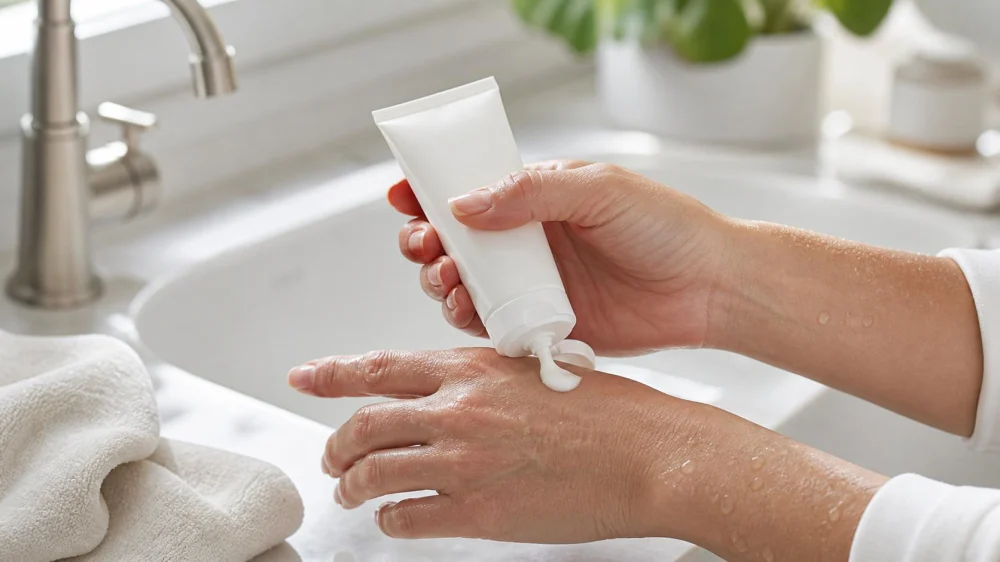
- Moisturize immediately. Apply the product while the hands are still slightly damp.
If a workplace, health-care setting, food-service role, or home-care situation has a required hygiene protocol, follow that protocol. Ask occupational health or a clinician how to protect the skin without weakening infection-control steps.
Moisturize after every wash
The American Academy of Dermatology recommends applying a hand cream or ointment to damp skin after washing. Work it into the fingertips, backs of hands, spaces between fingers, and around nails without putting a slippery layer on surfaces that require secure grip.
Keep a small tube at each routine wash location and another in a work bag. A visible product is easier to use consistently. For daytime tasks, a cream that absorbs adequately may be practical. A thicker ointment can reduce water loss but may feel greasy, so it may suit quiet evening use better.
After hand sanitizer, wait until the sanitizer has dried before applying moisturizer. Do not dilute sanitizer, mix it into cream, or wipe it off early to reduce dryness.
Choose products by function and comfort
- Cleanser: choose a product that cleans adequately without unnecessary fragrance, abrasive particles, or a strong degreasing feel. Individual tolerance varies.
- Moisturizer form: lotions are lighter; creams and ointments are thicker and often more protective for very dry skin.
- Label: AAD guidance suggests fragrance-free and dye-free options for dry, chapped skin. “Unscented” can still include fragrance-related ingredients used to mask odor.
- Ingredients: AAD notes mineral oil or petrolatum in products that tend to feel less irritating to chapped skin. A clinician can help when you have known allergies or prior reactions.
- Packaging: a tube or tub can dispense thicker cream or ointment. Avoid dipping unclean hands into a shared container.
Introduce one change at a time and keep the package. Stop a product that causes burning, swelling, hives, worsening rash, or other concerning reaction, and seek appropriate care.
Protect hands during wet or messy work
Dishwashing, cleaning, gardening, food preparation, hair services, health care, mechanical work, and frequent glove use can add water, chemicals, friction, or sweat. Match protection to the task:
- Use task-appropriate gloves for water, cleaners, soil, or chemicals, following product and workplace instructions.
- Keep the inside of reusable gloves clean and dry. Replace damaged gloves.
- Do not wear a glove material that has caused a reaction. Ask occupational health or a dermatologist about alternatives.
- Remove gloves when the task ends and dry damp hands before moisturizing.
- Wear warm gloves outdoors in cold, dry weather when appropriate.
- Avoid trapping wet skin in non-breathable gloves for long periods unless the task protocol requires it.
Gloves do not replace handwashing or chemical safety. Never mix cleaners, and do not rely on moisturizer as a protective glove or barrier against hazardous substances.
Simple daily hand-care checklist
- Lukewarm water and required washing time
- Complete rinse and gentle pat drying
- Moisturizer applied while skin is slightly damp
- Moisturizer reapplied after sanitizer dries
- Task-specific gloves clean, dry, and intact
- No cleaner, fragrance, or new product worsening symptoms
- Cracks protected from further friction according to clinician guidance
- Symptoms checked at the same time each day for improvement or spread
When to seek dermatology care
Contact a dermatologist or other qualified clinician when the hands remain very dry despite a consistent routine, or when there is increasing pain, deep cracking, bleeding, blistering, crusting, pus, weeping, swelling, warmth, spreading redness or discoloration, or a rash that interferes with work or sleep.
Seek urgent care for a severe allergic reaction, rapidly spreading swelling or rash, trouble breathing, major chemical exposure, severe burn, or signs of a serious infection. Follow poison-control or emergency instructions after hazardous product exposure rather than applying home remedies.
Limitations and important notes
- Moisturizer can support the skin barrier but cannot identify or remove an occupational allergen or irritant.
- Over-the-counter antibiotic, steroid, antifungal, or numbing products are not interchangeable; ask a clinician before treating an undiagnosed rash.
- Open cracks can sting when products are applied. Persistent or worsening pain needs assessment.
- Jewelry can trap soap, water, and product. Clean and dry the skin and jewelry appropriately, or remove it when permitted.
- Do not share personal cream containers in a way that contaminates the product.
Frequently asked questions
Should I wash my hands less when they are dry?
Continue washing when hygiene guidance calls for it. Make the routine gentler and moisturize immediately afterward. Ask a clinician about severe or persistent symptoms.
Is lotion enough for cracked hands?
A thicker cream or ointment may reduce water loss better, but cracks can also signal eczema, contact dermatitis, or infection. Painful, deep, bleeding, or non-healing cracks need evaluation.
Can I apply moisturizer after hand sanitizer?
Yes, after the sanitizer has fully dried. Do not mix the two products or wipe off sanitizer before it completes the label-directed process.
What does fragrance-free mean?
It generally means fragrance ingredients are not added for scent. “Unscented” may use ingredients to mask odor. Check the full label and prior reactions.
Can gloves make dry hands worse?
They can when the material irritates skin, sweat remains trapped, or chemical leaks inside. Use the correct intact glove, keep reusable gloves dry, and seek guidance for recurring reactions.
Evidence notes
AAD guidance recommends continuing necessary handwashing, using lukewarm water, patting hands until slightly damp, applying cream or ointment immediately after washing and after sanitizer dries, and considering thick fragrance-free and dye-free products containing mineral oil or petrolatum. AAD also notes that persistent painful, cracked, bleeding, or weeping hands may be hand eczema and need dermatology care. See AAD dry-skin relief from handwashing, AAD dry-skin tips, and AAD hand eczema guidance.
Next steps
Place a fragrance-free cream or ointment beside the sink, switch hot water to lukewarm, and moisturize after every wash for a consistent trial. Write down work exposures and products. If symptoms do not improve or if cracks, pain, bleeding, or rash worsen, schedule a dermatology evaluation.



 Alegria Aesthetics5.0 (6 reviews)
 A Pink Parlour Skincare Suite0.0 (0 reviews)
 Albergo Dermatology5.0 (2 reviews)
 Skin by Jerzundas R5.0 (3 reviews)
 About Face5.0 (5 reviews)
 Advanced Dermatology Care4.0 (241 reviews)
 Everything You Need To Know About Eye Creams To Improve Dry Skin
 How to Treat Acne Scars: The Best Treatments and Home Remedies
 How to Use Hyaluronic Acid for Fine Lines and Skin Care Treatment
 How to Use Alpha Hydroxy Acids (AHAs) for Glowing Skin
 How to Achieve Clear Skin Fast with the Right Daily Skin Care Routine
 Body Moisturizer After Shower: A Routine for Dry Skin