
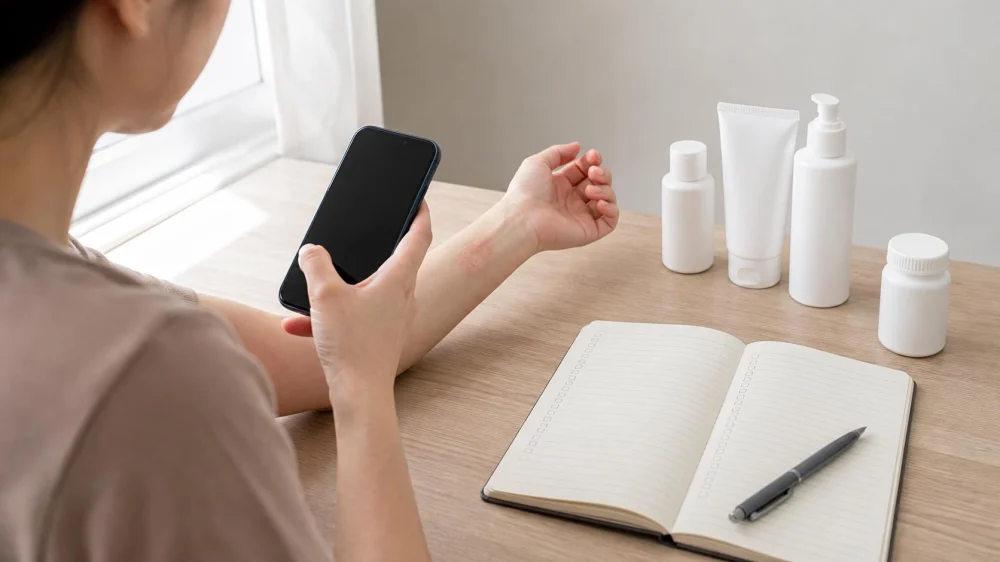
Dermatology Appointment Prep: Photos, Products, and Questions
On this page
- Quick answer
- Describe the concern when booking
- Build a short symptom timeline
- Take useful skin, hair, or nail photos
- Bring products, medications, and records
- Prepare the skin on appointment day
- Prioritize questions and decisions
- Take notes during and after the visit
- Urgent-care boundaries
- Limitations and important notes
- Frequently asked questions
- Evidence notes
- Next steps
Quick answer
Prepare for a dermatology appointment with a factual timeline, clear unfiltered photos of changes, a complete medication and supplement list, the skin and hair products you use, prior test results, and three prioritized questions. Tell the office about pain, bleeding, rapid change, or other urgent features when booking. On visit day, keep the areas to be examined free of makeup, nail polish, and heavy product when possible.
This guide is for adults in the United States preparing for an in-person or virtual dermatology visit. It does not diagnose a rash, spot, hair change, or nail problem. Follow the office's specific instructions, especially for procedures, allergy testing, surgery, telemedicine, or medication monitoring.
Describe the concern when booking
Use one plain sentence that states the main problem, location, timing, and change: “A spot on my shoulder has grown and bled twice in six weeks,” or “An itchy rash on both hands is spreading despite stopping a new cleaner.” Avoid selecting a routine cosmetic category when pain, bleeding, infection, or rapid change may need different scheduling.
Ask the office:
- Whether the visit is in person, by video, or photo-and-message review
- Which clinician or specialty area fits the concern
- What forms, records, referral, insurance information, or prior authorization are required
- Whether to stop any product or medication before the visit—never stop a prescription without instructions
- Whether a full skin examination, focused visit, procedure, or patch testing requires special preparation
- How to send photos securely and what file format or size is accepted
Build a short symptom timeline
A useful timeline helps the dermatologist see change rather than one isolated day. Record:
- First date or approximate week noticed
- Original location and where it has spread or appeared again
- Changes in size, color, texture, shape, pain, itch, bleeding, drainage, or hair and nail growth
- How long episodes last and whether the skin returns to normal
- Work, travel, sun, heat, cold, water, friction, plant, animal, chemical, or household exposures
- New or changed skin care, hair care, cosmetics, nail products, detergent, medication, supplement, food, or equipment
- Treatments tried, exact dates, frequency, benefit, and unwanted effects
- Relevant family history and previous skin, hair, nail, allergy, or cancer history
Separate observation from diagnosis. “Raised red patches appear after work and fade overnight” is useful history; “chemical allergy” is a conclusion the clinician still needs to evaluate.
Take useful skin, hair, or nail photos
AAD guidance recommends clear images that show location, comparison, and detail. Use good light, a neutral one-color background, and no filters. Make sure the picture matches the color and texture you see.
- Remove covering product gently. When the area is safe to clean, remove makeup or nail polish before the photo. Wait for temporary removal irritation to settle.
- Use light from the front or side. Bright window light is useful. Avoid backlighting, harsh glare, and deep shadow.
- Take an orientation photo. Show where the concern sits on the body.
- Take a comparison photo. Include nearby unaffected skin or the corresponding other hand, foot, or nail.
- Take a close-up. Fill the frame while keeping edges and surface detail in focus.
- Add scale safely. Place a clean ruler beside—not over—the area if the dermatologist requests size tracking. Do not press a painful or open lesion.
- Keep originals. Save date and normal-speed video or unedited photos. Do not enhance color, smooth skin, or crop away context.
Ask the office how to send files securely. Skin and body photos are medical information and may reveal identity, location, or other people.
Bring products, medications, and records
- A list of every prescription and over-the-counter medication with dose and schedule
- Vitamins, supplements, herbal products, and medicated shampoos or creams
- Current and recently stopped skin, hair, nail, fragrance, adhesive, cleanser, detergent, and cosmetic products relevant to the concern
- Clear photos of ingredient panels when carrying full containers is impractical
- Prior biopsy, pathology, laboratory, allergy, imaging, or treatment results not already available to the dermatologist
- Names and dates of previous diagnoses and procedures
- Allergies and prior reactions to medicine, adhesives, antiseptics, dyes, metals, or skin products
Bring the actual package for an unclear product. “The blue cream” or a screenshot from an old listing may not identify the current formula. Do not apply a product again solely to reproduce a reaction.
Prepare the skin on appointment day
AAD guidance says a dermatologist needs to see bare skin and nails. When the office agrees, avoid makeup, nail polish, heavy moisturizer, self-tanner, hair fibers, or another covering product on areas that need examination. Bring gentle removal supplies if you must arrive wearing something.
Do not scrub, pick, shave closely over, bleach, exfoliate, squeeze, or expose the area to hot water just to make it easier to see. These actions can irritate skin, remove diagnostic scale or crust, cause bleeding, or change appearance. Continue prescribed treatment unless the clinician tells you to change it.
Wear clothing that makes the relevant area accessible while protecting privacy and comfort. Ask about a gown, chaperone, interpreter, mobility support, sensory need, or caregiver before the visit.
Prioritize questions and decisions
- What are the leading possibilities, and what information supports them?
- Is any test, biopsy, culture, or in-person examination needed, and what would it change?
- What should I start, stop, or continue, and exactly where and how often is it used?
- What side effects or reactions should make me stop and call?
- When should improvement begin, and when is the result judged?
- What should I photograph or track between visits?
- What symptoms require urgent care rather than the next follow-up?
- What are the alternatives if cost, pregnancy, allergy, work, or another condition affects the plan?
Put the most important question first. A focused medical visit may not cover every cosmetic concern, refill, and separate rash. Ask how to schedule remaining issues.
Take notes during and after the visit
Keep a notebook open and ask for plain-language explanations. Write the medical term, body site, product or medication, amount, frequency, duration, and follow-up date. Repeat the plan back to confirm you understood.
After the visit, compare written instructions with your notes. Contact the office before guessing about conflicting directions, application areas, missed doses, procedure care, or product substitutions. Use the patient portal or other method the practice recommends.
Urgent-care boundaries
Do not wait for a routine dermatology appointment when a rash spreads rapidly, blisters or becomes open raw skin, occurs with fever or illness, is painful, involves the eyes, lips, mouth, or genital skin, or follows a severe medication or allergic reaction. Trouble breathing, facial or throat swelling, fainting, severe burn, major chemical exposure, or rapidly worsening infection signs require emergency assessment.
This is not a complete triage list. Call a qualified clinician or emergency service for current direction and bring product or medication information without delaying care.
Limitations and important notes
- Photos can distort color, scale, depth, texture, and temperature and cannot replace every in-person examination.
- A symptom diary can reveal timing but does not prove a trigger or cause.
- Skin-product ingredient lists and formulas can change; document the package actually used.
- Do not stop steroids, antibiotics, immunosuppressants, anticoagulants, or any prescription because of online preparation advice.
- Telemedicine may still lead to an in-person exam, biopsy, testing, or urgent referral.
Frequently asked questions
Should I stop all skin care before the appointment?
No. Ask the office. Avoid covering the area on visit day when instructed, but continue prescribed treatment unless the clinician gives a different plan.
How many photos should I take?
AAD guidance recommends multiple views, including orientation, comparison, and close-up images. Take enough to be in focus and show change, then follow the dermatologist's preferred schedule.
Should I bring every product I own?
Bring the products relevant to the concern and clear ingredient photos for others. Include recently stopped products when timing suggests they matter.
Can makeup hide a skin problem from the dermatologist?
Yes. The clinician needs to see skin color and texture. Arrive without makeup on areas being examined when possible, or bring gentle removal supplies.
What if the rash disappears before the visit?
Keep the appointment unless the office advises otherwise. Bring clear dated photos, a timeline, exposure details, and information about what changed.
Evidence notes
AAD guidance recommends describing urgent features at booking, writing questions and medication or supplement lists, bringing relevant history and test results, and allowing examination of bare skin and nails. For photos, AAD recommends good lighting, a neutral background, no filters, and orientation, comparison, and close-up views shared through the office's secure method. See AAD dermatologist selection and visit preparation, AAD skin-photo instructions, and AAD telemedicine appointment preparation.
Next steps
Create one appointment folder with the timeline, three original photos, medication and supplement list, relevant product labels, prior results, and three questions. Confirm the office's preparation and upload instructions, then keep the examined areas uncovered without changing prescribed care.



 Honest Skin5.0 (12 reviews)
 Anitasbeautymark.com3.0 (3 reviews)
 GYN Solutions & Aesthetics5.0 (84 reviews)
 Peachy Kleen Ko.5.0 (2 reviews)
 South Florida Aesthetics5.0 (26 reviews)
 Fancy SkYn5.0 (1 reviews)
 How to Avoid and Manage Inflamed Skin: Expert Skincare Advice
 How to Choose the Best Facial Moisturizer for Your Skin Type
 Anti-Aging Skincare: What Works and What Doesn’t?
 How to Incorporate Zinc Oxide into Your Skincare Routine for Better Sun Protection
 How to Treat Acne Scars: The Best Treatments and Home Remedies
 Everything You Need To Know About Scars Using Natural Remedies