
Cosmetic Shelf Life: Date, Store, Inspect, and Discard
On this page
Quick answer
Cosmetics do not all share one safe discard date. Follow any manufacturer directions, mark when you open a product, keep containers and applicators clean, and protect products from heat, moisture, sunlight, and air. Discard an item if its odor, color, texture, separation, packaging, or performance changes. Sunscreen and acne treatments may be drugs, so their labeled expiration dates and directions require separate attention.
Separate cosmetic shelf life from drug expiration
In the United States, ordinary cosmetics generally are not required to carry expiration dates, although manufacturers remain responsible for safety. Shelf life depends on formulation, packaging, storage, and use. Fingers and applicators can introduce microorganisms; preservatives can weaken; emulsions can separate; and heat, moisture, sunlight, and air can alter a product. Some personal-care products, including sunscreens and acne treatments, are regulated as drugs and follow drug labeling requirements.
This guide is for adults organizing personal cosmetics at home. It does not diagnose a rash, establish a universal life span for every formula, or replace the product label, manufacturer guidance, pharmacist advice, or medical care.
Practical checklist
- Read the full label for expiration, storage, warning, and application instructions.
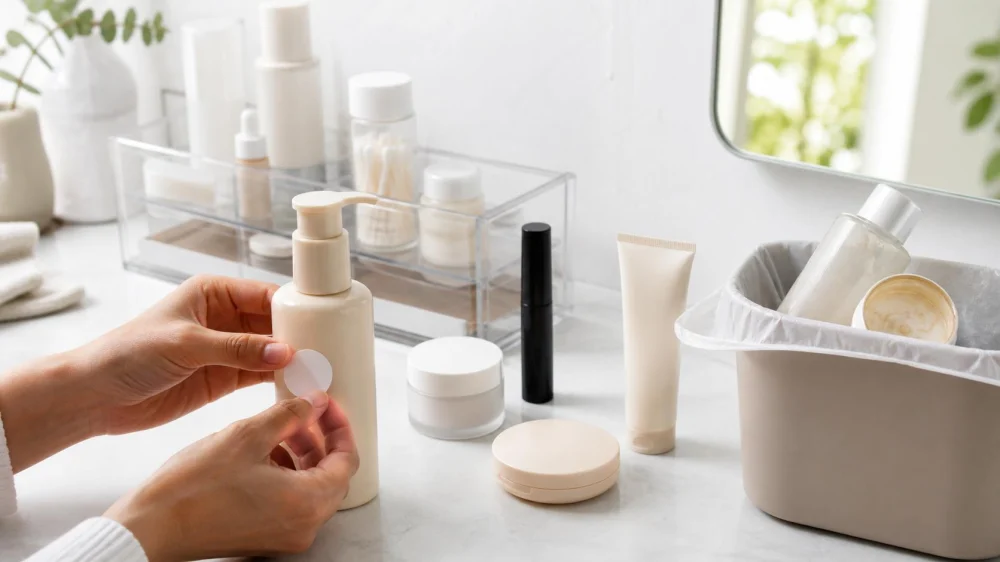
- Write the open date on the container or in a simple product log.
- Keep lids closed and containers and reusable applicators clean and dry.
- Store products away from hot cars, direct sunlight, shower spray, and excessive humidity.
- Avoid adding water or saliva to restore a dried or thickened product.
- Do not share makeup or reuse a tester applicator on the skin.
- Check odor, color, texture, separation, leakage, swelling, and package damage before use.
- Discard products linked to an eye infection or unexpected reaction and seek advice when needed.
Step-by-step plan
- Gather products by type and separate drugs such as sunscreen or acne treatment from ordinary cosmetics.
- Read each container and outer carton; record the printed expiration or lot information before discarding packaging.
- Mark the date opened, then follow the shortest applicable instruction from the label or manufacturer.
- Move products to a clean, dry, temperature-stable location and keep caps, pumps, and jars closed.
- Before each use, inspect the formula and package without tasting or deliberately smelling closely.
- Stop using and isolate any item that has changed, leaked, become contaminated, or caused a reaction.
- Review the collection periodically and discard questionable products according to local disposal guidance.
Record product name, purpose, date purchased, date opened, labeled expiration, storage location, and any visible change or reaction. A phone note or small label is enough; do not transfer a product into an unlabeled container merely to simplify tracking.
Limits and important notes
A jar symbol, open date, or general online timetable cannot guarantee safety because formulation and handling differ. A normal appearance also cannot prove that a contaminated product is safe. Do not assume products labeled natural, organic, hypoallergenic, or preservative-free have a longer or safer shelf life.
Stop use and contact a health professional for a significant or persistent rash, swelling, burn, eye symptoms, breathing difficulty, or other concerning reaction. Seek urgent help for breathing trouble or rapidly worsening symptoms. FDA accepts reports about cosmetic reactions and product problems; retain the container, lot code, purchase details, and photos when safe.
Frequently asked questions
Do all cosmetics need an expiration date?
No. FDA says U.S. law generally does not require expiration dates on cosmetics, but manufacturers are responsible for product safety. Drugs and cosmetic-drug combinations have different requirements.
Can I add water to dried mascara?
No. FDA advises discarding dry mascara rather than adding water or saliva, which can introduce microorganisms and alter the formula.
Is a bathroom cabinet a good storage place?
It may expose products to heat and moisture. Follow the label and prefer a clean, dry, temperature-stable location when the manufacturer does not specify otherwise.
What if a product smells or looks different?
Stop using it. Changes in odor, color, texture, separation, or packaging can signal degradation or contamination; follow manufacturer or FDA reporting guidance when appropriate.
Sources and evidence
The U.S. Food and Drug Administration's Shelf Life and Expiration Dating of Cosmetics and Using Cosmetics Safely pages explain that cosmetic shelf life varies, ordinary cosmetics generally need not display expiration dates, storage and contamination matter, and unexpected reactions should be reported. Product labels and manufacturer instructions remain controlling.
Conclusion and next steps
Start with products used around the eyes and any sunscreen or acne treatment. Record dates, move items away from heat and moisture, clean applicators, and discard changed or questionable products. For a reaction, stop use, preserve product details, and contact an appropriate health professional rather than testing the item again.


 Claire Hammond Skin Care5.0 (15 reviews)
 Vanguard Skin Specialists4.0 (208 reviews)
 Luminescence Aesthetics5.0 (25 reviews)
 Feelings Skincare Studio0.0 (0 reviews)
 Boca Raton Skin & Laser Center3.0 (2 reviews)
 ABS medical aesthetic4.0 (15 reviews)
 The Importance of Double Cleansing and How to Do It Correctly
 Everything You Need To Know About Eye Creams To Improve Dry Skin
 How To Brighten Physical Exfoliants for Hyperpigmentation Skin
 Best Skin Care Routine For Scars For Sensitive Skin: Effective Healing Tips
 How to Protect Your Skin from Harsh Winter Weather
 How to Get Rid of Excess Oil with Mattifying Skin Care Products