
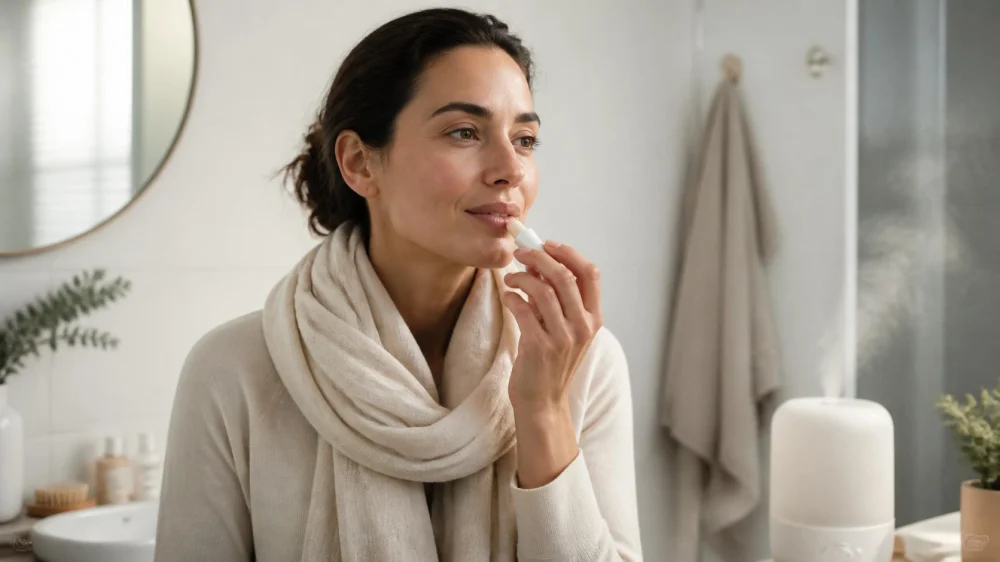
Chapped Lips: Build a Simple Barrier-Support Routine
On this page
Quick answer
For uncomplicated chapped lips, stop licking and picking, rinse irritating residue gently, and apply a plain fragrance-free ointment or balm repeatedly, especially after eating and before sleep. Use a compatible lip sunscreen outdoors and protect against wind and dry air. Add only one product at a time. Seek medical care for severe swelling, blisters, spreading rash, pus, fever, trouble breathing, persistent cracking, or symptoms that do not improve.
Chapped lips are dry, rough, peeling, or cracked lip skin caused by barrier disruption. Many products and habits can worsen the cycle even when they feel soothing briefly.
Common contributors
- cold, wind, sun, or low humidity;
- lip licking, biting, picking, or mouth breathing;
- fragrance, flavor, menthol, camphor, or irritating cosmetics;
- toothpaste, food, instrument, or dental-product contact;
- medications, dehydration, allergy, infection, or an inflammatory skin condition.
A list of exposures helps a clinician, but it does not identify the cause by itself.
Simple routine
- Pause new lip products and obvious irritants.
- Rinse gently with lukewarm water after irritating food or toothpaste residue.
- Pat dry; do not scrub off flakes.
- Apply a thin layer of a bland compatible ointment.
- Reapply after eating, drinking, toothbrushing, and before bed.
- Use a lip sunscreen outdoors under label directions.
Choose a short ingredient list and keep the applicator clean. A product that stings, burns, or increases redness is not a sign that it is working.
What to avoid
- pulling loose skin or using lip scrubs;
- sharing balms or applying with dirty fingers;
- repeatedly switching products;
- using topical antibiotics, steroids, antifungals, or numbing agents without clinical guidance;
- placing non-lip essential oils or household remedies on broken skin.
Weather and daily habits
Cover the lower face loosely in cold wind without trapping wet fabric against lips. Use indoor humidity safely when air is dry and clean the device as directed. Drink normally for your needs, but do not expect extra water alone to repair an irritated lip barrier.
For persistent night dryness or mouth breathing, discuss nasal, dental, sleep, or medication factors with a qualified clinician instead of taping the mouth.
When to seek care
Arrange evaluation for cracks at the mouth corners, recurring blisters, a persistent scaly patch, bleeding, significant pain, swelling, pus, crusting, rash beyond the lips, or symptoms lasting despite a simple routine. Seek urgent help for breathing or swallowing difficulty or rapidly increasing facial swelling.
Important notes
This is general skin-care information, not diagnosis or treatment. Infants, children, pregnant people, immunocompromised people, and anyone using prescription skin or acne medication may need individualized advice. Follow product age limits and warnings.
Evidence notes
The routine reflects common dermatology guidance: remove irritants, avoid trauma, use a bland occlusive barrier, protect from weather and sun, and evaluate persistent or severe disease. A dermatologist or other qualified clinician is the primary source for diagnosis.
FAQ
Why does lip licking make dryness worse?
Saliva evaporates and repeated wet-dry cycles can disrupt the barrier.
Should I exfoliate peeling lips?
Usually no. Scrubbing can deepen cracks. Use gentle barrier care.
Is tingling balm helpful?
Tingling can signal irritation. Stop products that burn or worsen redness.
Can chapped lips be an allergy?
Sometimes. Persistent patterns may need clinical evaluation and ingredient review.
How quickly should lips improve?
Mild irritation may improve over days, but timing varies. Seek care when it persists or worsens.
Next steps
Stop licking and extra products today, choose one plain compatible barrier product, and note exposures. Protect lips from sun and wind. If pain, swelling, infection signs, blisters, or a persistent patch appears, book appropriate medical care.

 All About You Skin Care0.0 (0 reviews)
 Goddess Physique5.0 (1 reviews)
 Bel Viso Skincare5.0 (60 reviews)
 Corinne Bauer Skincare5.0 (19 reviews)
 Aesthetics by Mary4.0 (47 reviews)
 Apeeling Skin5.0 (65 reviews)
 Common Mistakes in Sensitive Skin for People Living in Humid Climates
 How to Prevent and Treat Pet Constipation with Natural Remedies
 How to Achieve Clearer Skin: 10 Proven Tips to Remove Blackheads Effectively
 How To Heal Your Redness With These 5 Proven Skin Tips
 Expert Advice on Puffy Eyes in People Over 40 – Causes and Solutions
 How To Brighten Rosacea Effectively - Safe and Proven Skin Care Tips